During the Spring semester I teach a class in Cultural Evolution for about 150 students. We use a ‘clicker’ technology that allows me to poll all students in the class electronically. Every year I ask them, in what state was the most complex, largest-scale pre-Columbian society in North America located? Most students choose New Mexico, because they have heard about the Anasazi. But the Ancient Pueblo People lived in small-scale, uncentralized societies. It is remarkable, but almost none of my students choose the correct answer – Southern Illinois, just across the Mississippi River from St. Louis.
I had wanted to visit Cahokia Mounds for years, and finally my chance came during the trip to St. Louis two weeks ago. What follows is my photo reportage of the visit to the site.
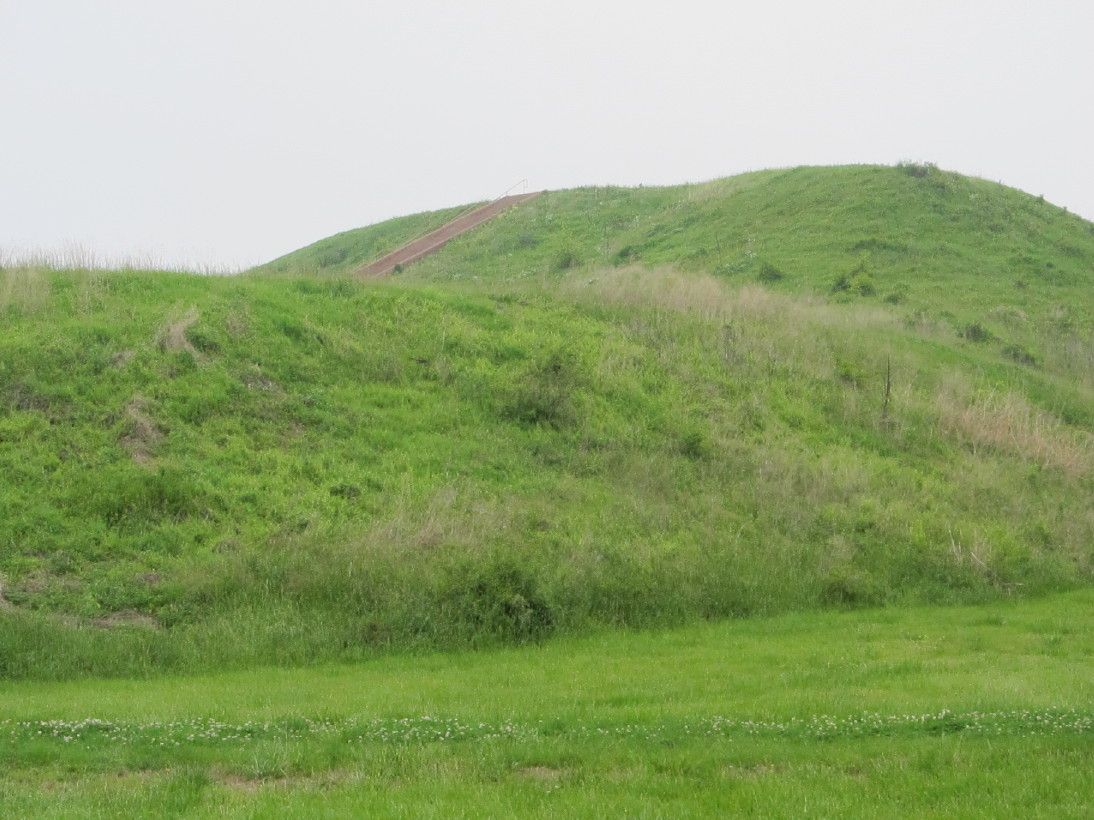
The site itself is not particularly impressive. Here’s the view of the largest mound, known as the Monks Mound:
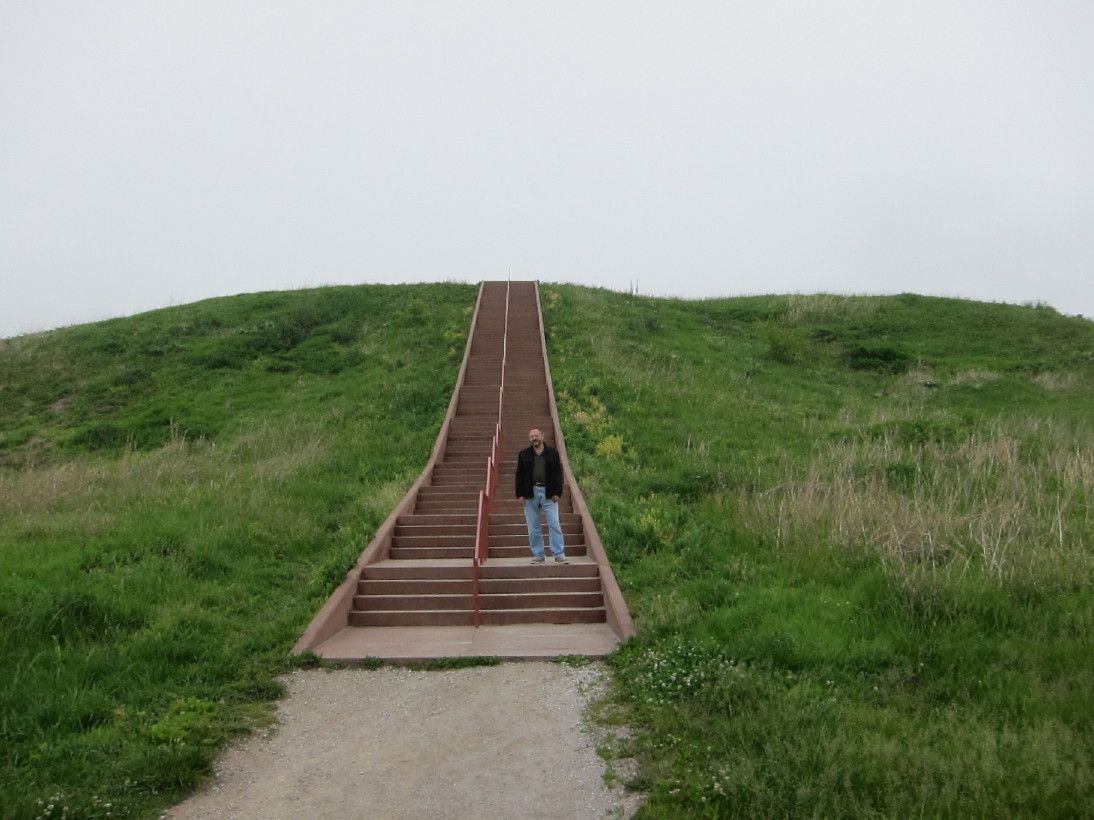
The staircase that leads to the top of the mound is, of course, a modern addition:
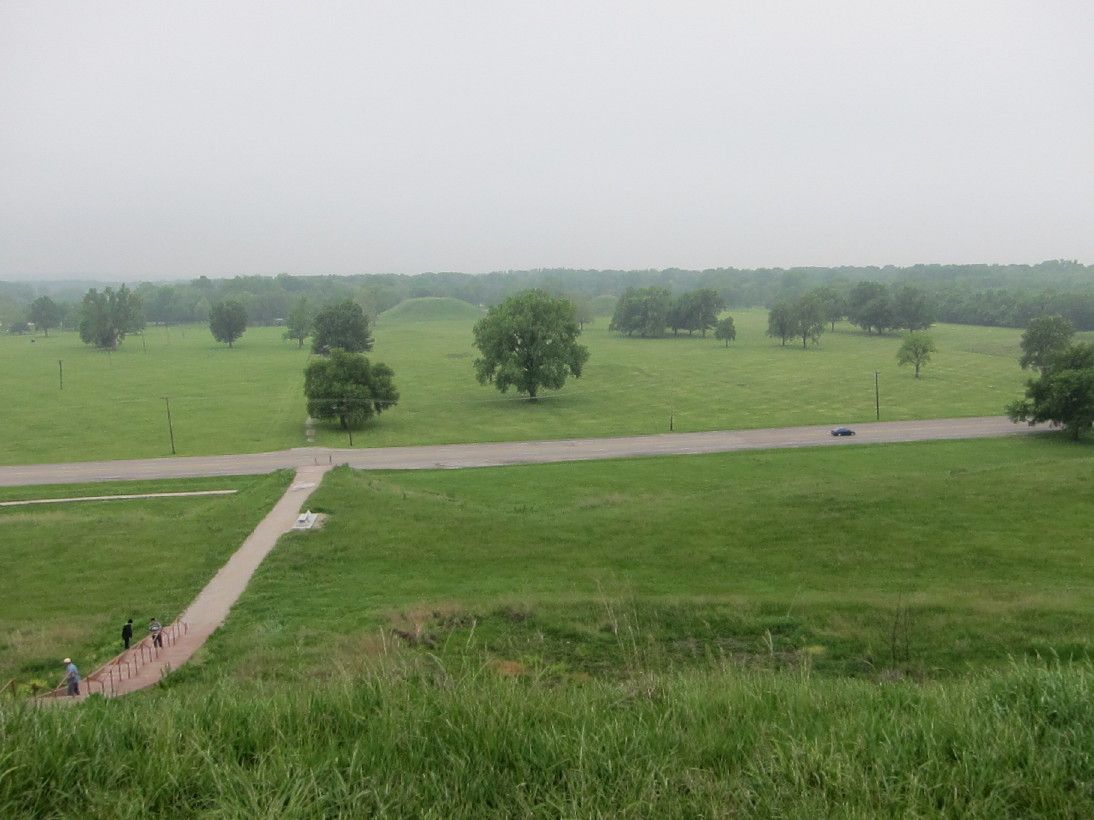
From the top of the Monks Mound one can look across what used to be a huge public space to the Fox Mound:
So trying to imagine what pre-Columbian Cahokia looked like requires a lot of imagination. Fortunately, there is a really nice Interpretive Center (this picture is from the website):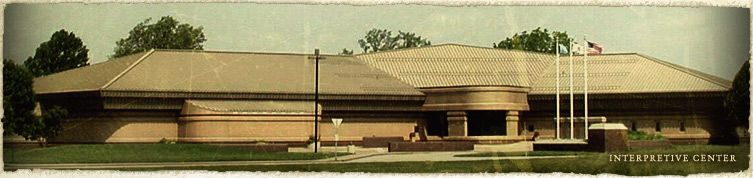
The folks at the Cahokia Mounds State Historic Museum Society have done a great job of reconstruction of what the Mississippian culture might have looked. Naturally, there is a lot of guesswork involved, but as our archaeological knowledge gets better, many of the errors of interpretation will be corrected.
Here’s an artist’s reconstruction of central Cahokia (by the way, obviously, we don’t know what the natives called their great city; unfortunately the Mississippian society had no writing):
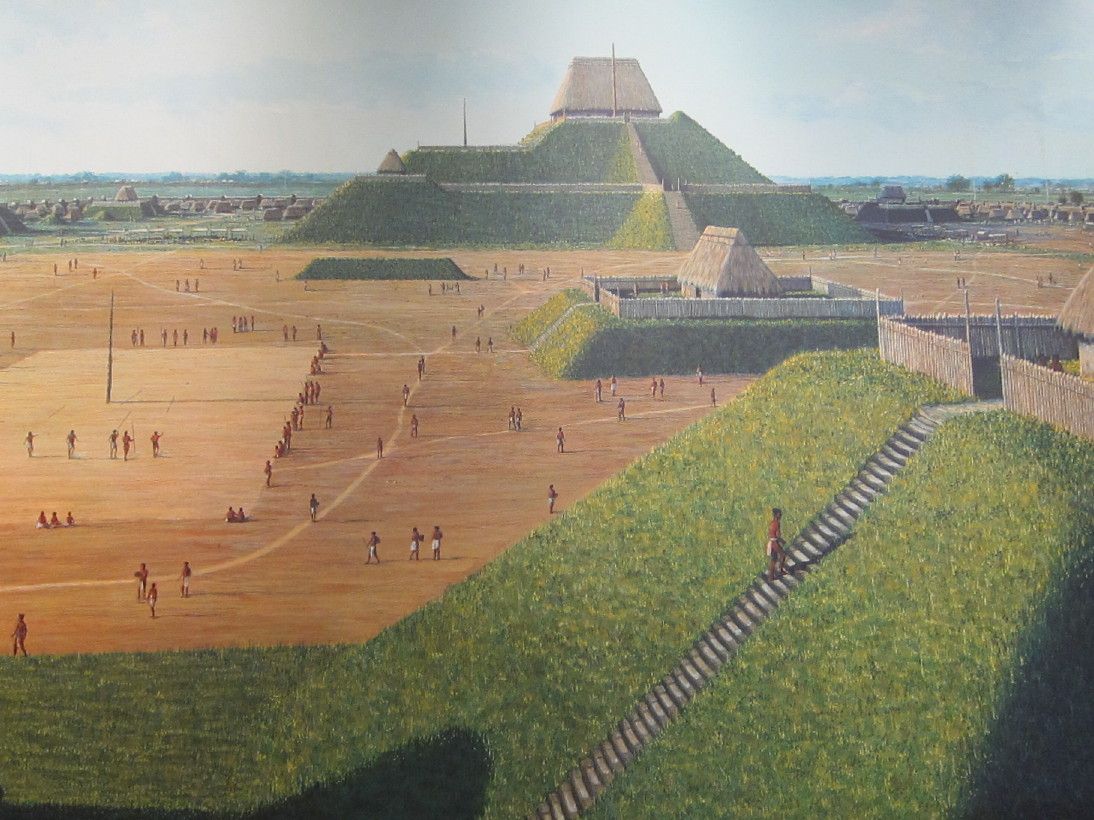
The large mound in the back is the Monks Mound, and the partially visible mound on the right in the forefront is the Fox Mound (compare to my photographs above).
The depicted activities of people are, as far as I know, a pure fantasy on the part of the artist (this is not a criticism – he or she had to somehow fill the landscape; just take it with a large helping of salt). One thing that is almost certainly wrong is the grassy green slopes of mounds. My colleague and co-author David Anderson told me that the mounds were probably covered with red, black, and white clays laid out in horizontal layers, which must have made for a visually striking image back in the thirteenth century.
There is probably a lot wrong with this reconstruction, but one thing seems certain – there was a huge public space in the middle of this pre-Columbian city. It was probably used for public rituals, and its extent is suggestive of huge crowds that must have participated in these rituals.
The scale of social organization is also indicated by the amount of labor that was necessary to mobilize in order to build the monumental mounds:
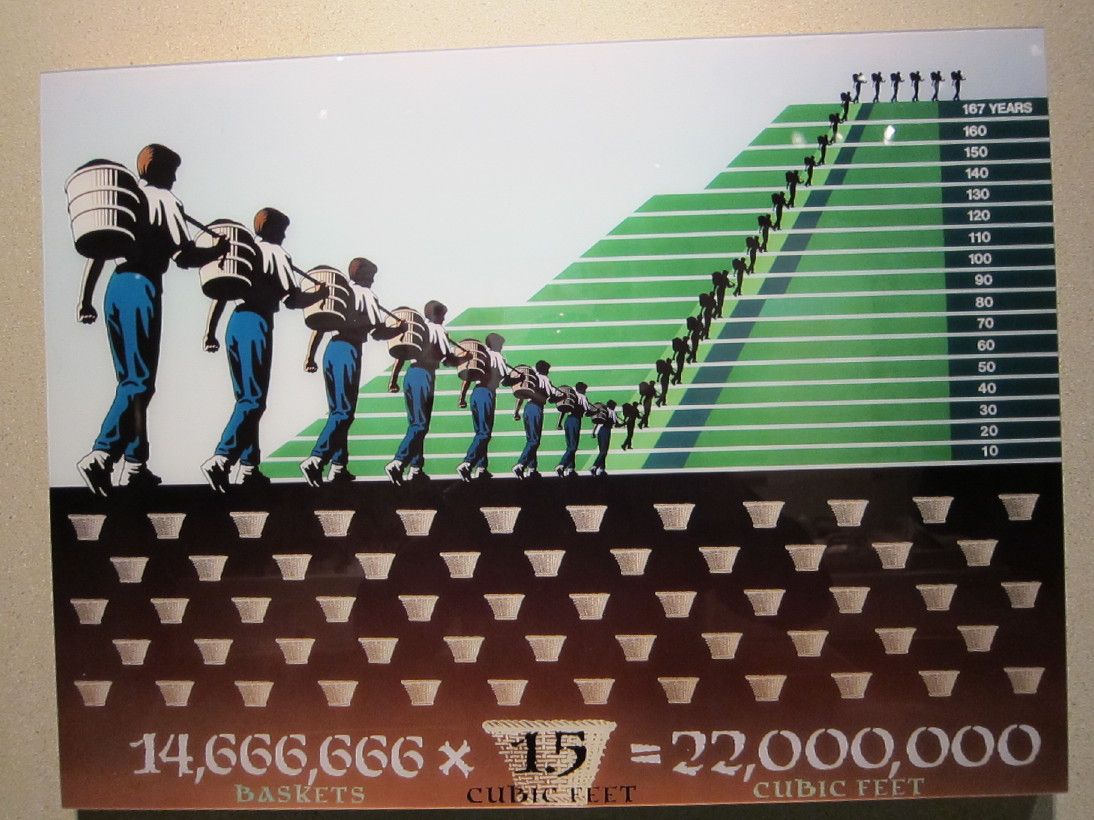
According to the calculation at the Center, the amount of labor that was required just to move earth to create the Monks Mound (the largest mound, but one of many) was c.5,000 people-years.
The central plaza was surrounded by houses, and there was a palisade that protected the center of Cahokia from attack:
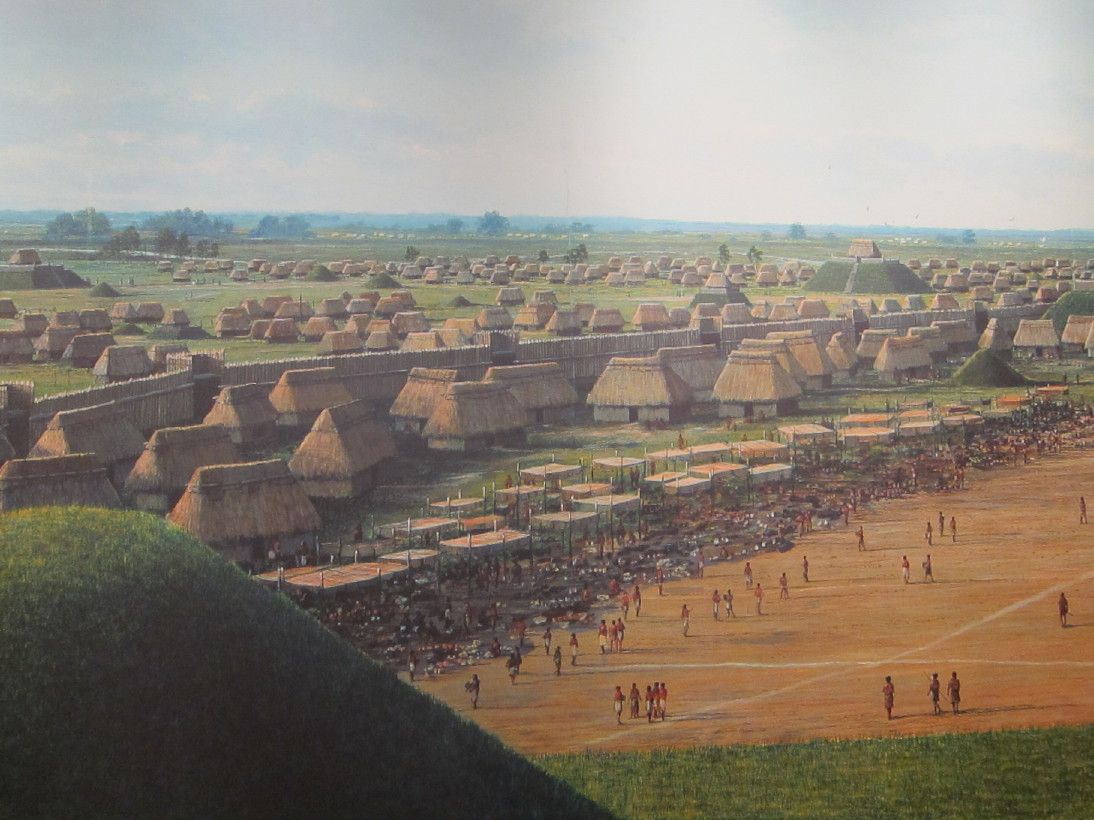
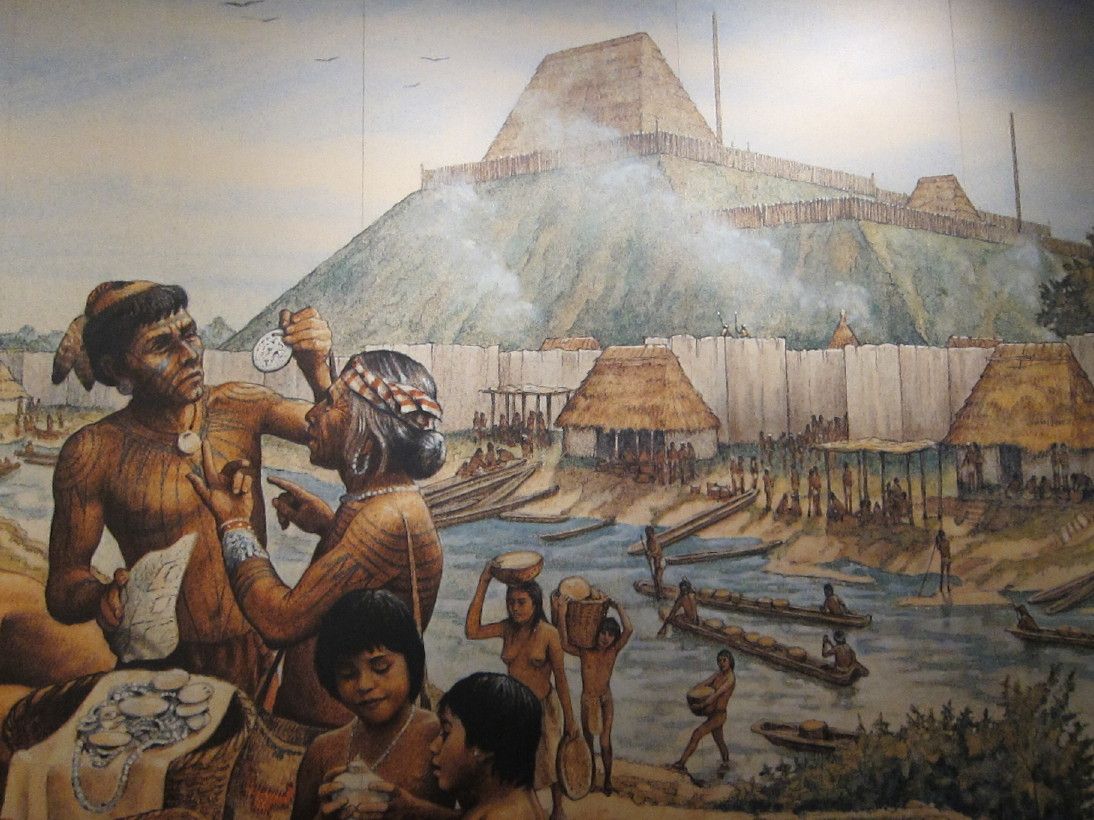
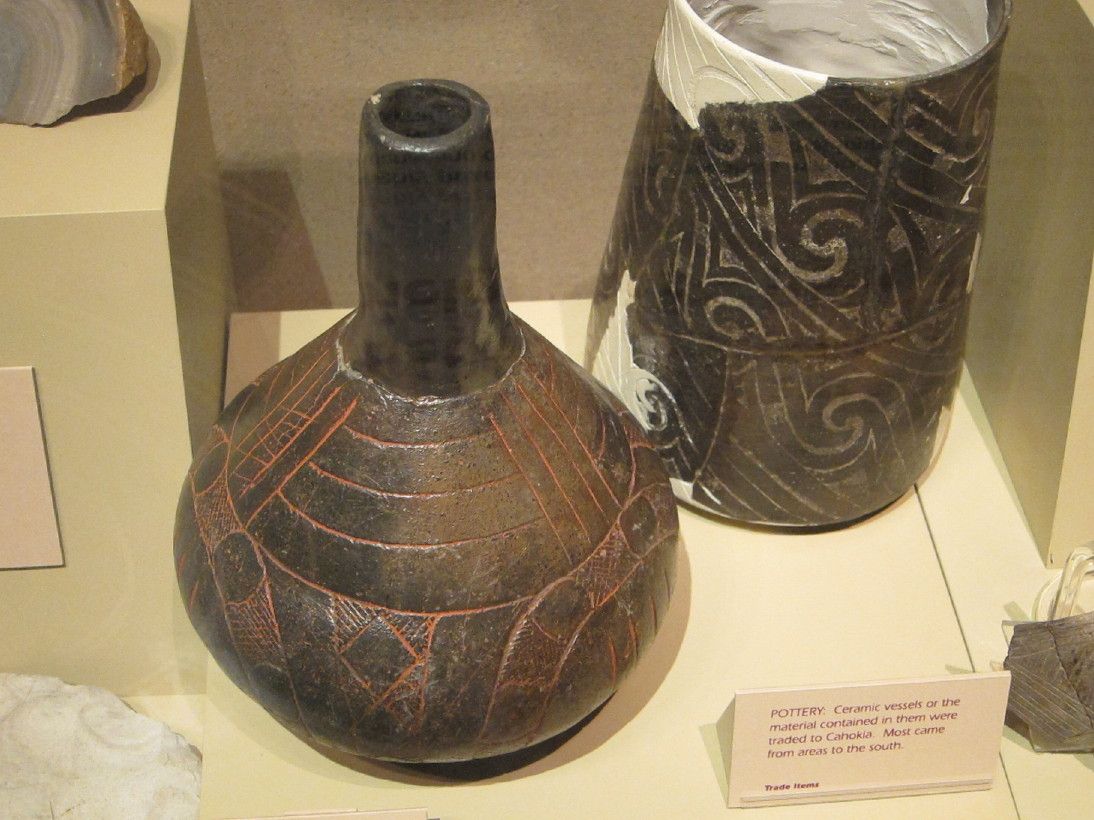
Note that many buildings were placed outside the defensive walls. Cahokia was a center of trade, and imported exotic materials from far away:
Here’s a very nice Caddoan water bottle that came from another culture to the southwest of Cahokia:
The Mississippian society was a complex, centralized polity. It was either a complex chiefdom, or even an archaic state, as recently argued by some archaeologists such as Tim Pauketat:
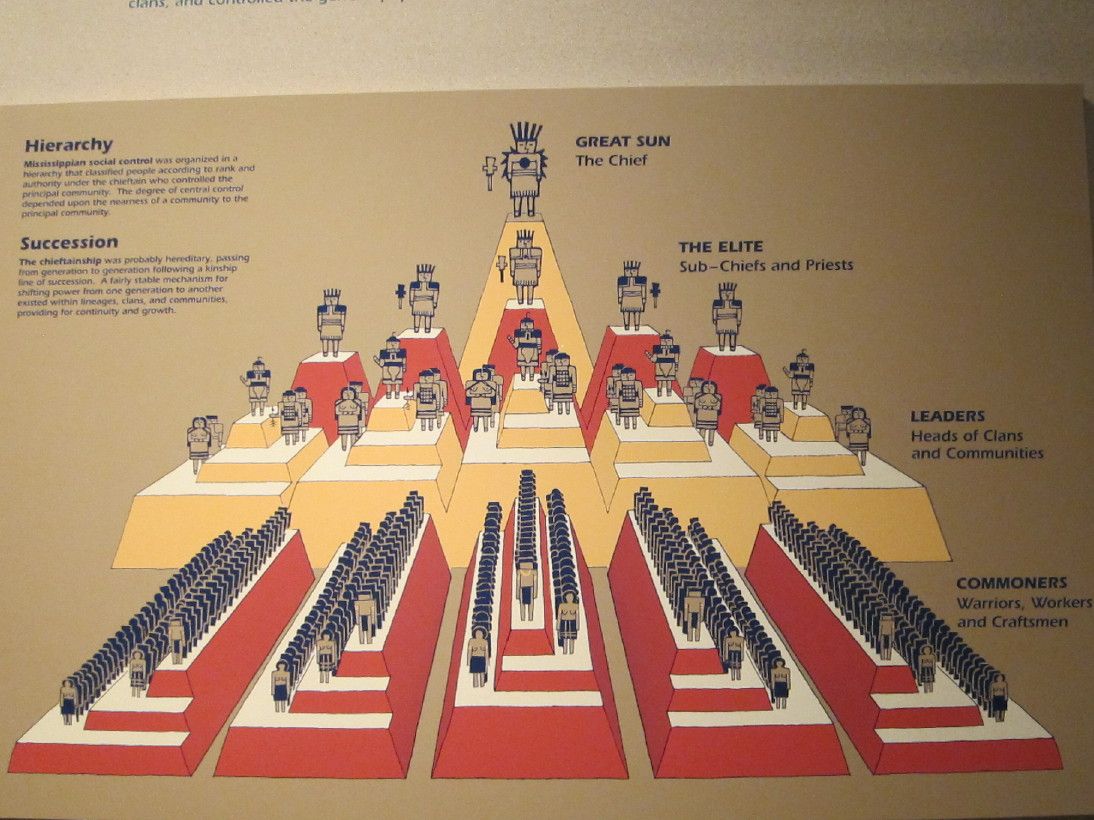
This social structure is reconstructed based on historically attested Mississippian chiefdoms after the European contact (which, however, were of much lesser scale than Cahokia).
The paramount ruler of Mississippian polities was called ‘Great Sun’ in later chiefdoms:
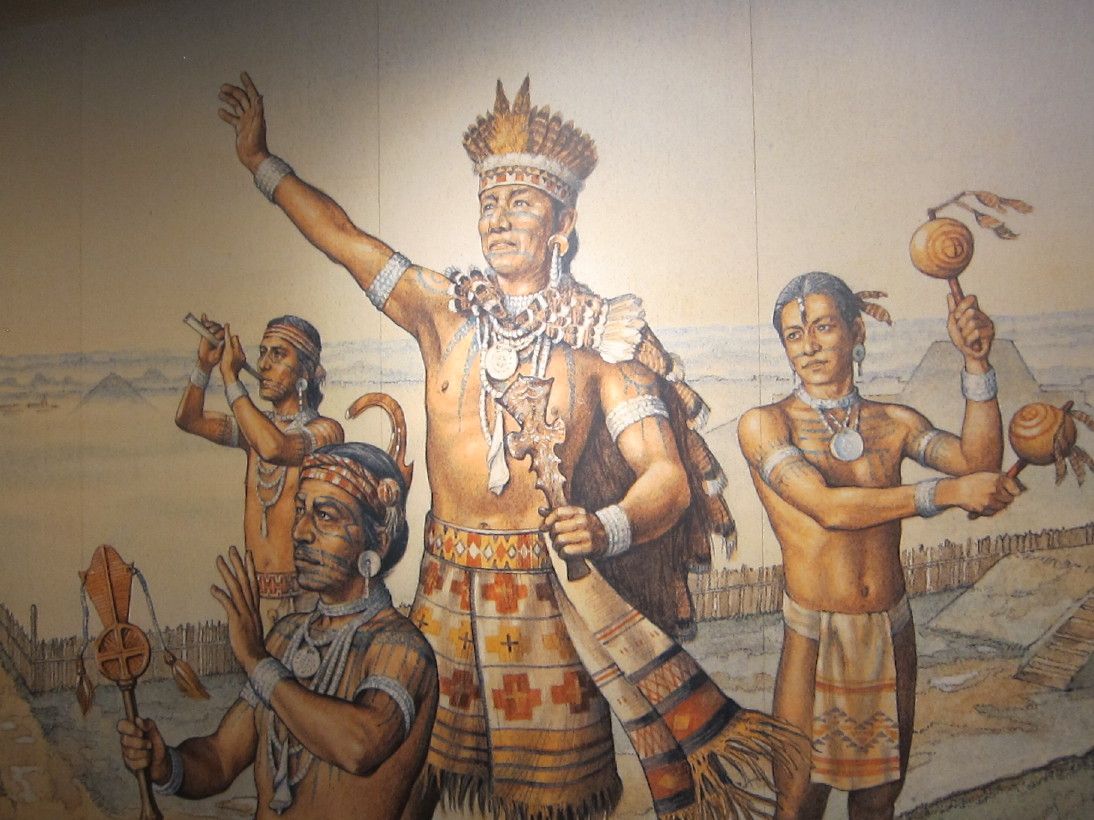
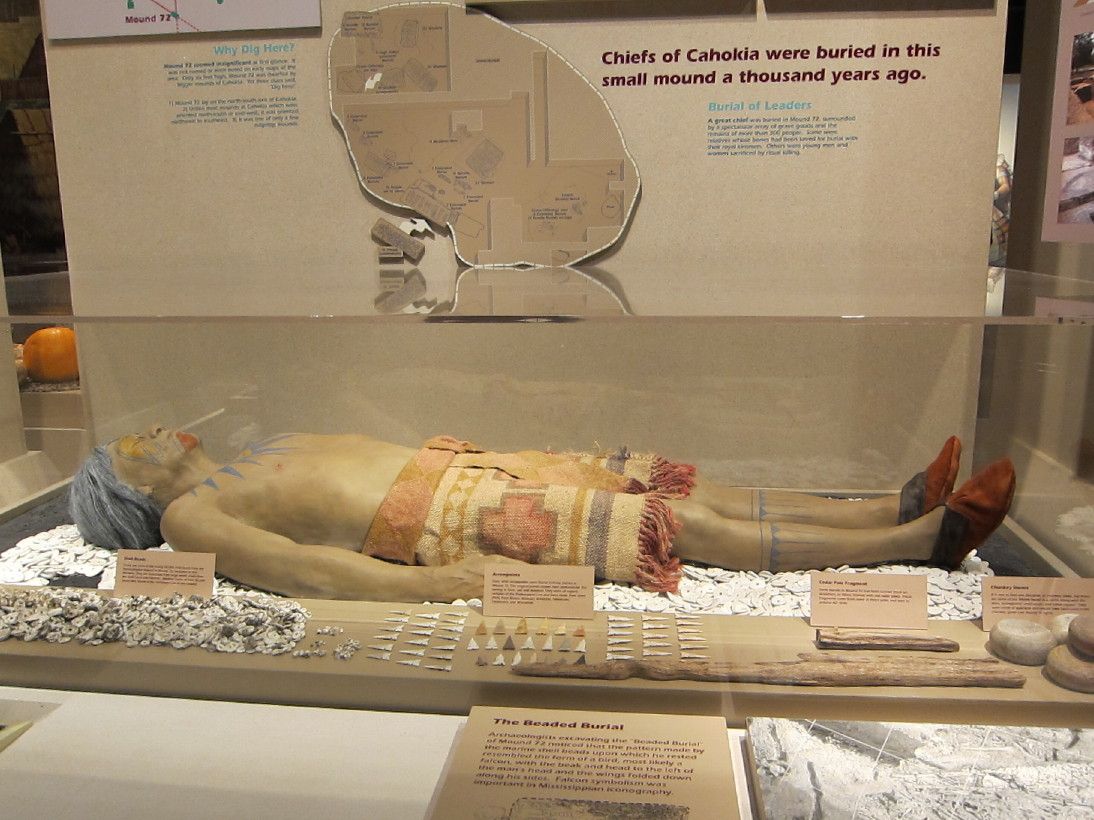
We actually have a pretty good idea of the kind of dress and ornamentation the Cahokian elites wore, from the burials:
A live elite individual could have looked like this:
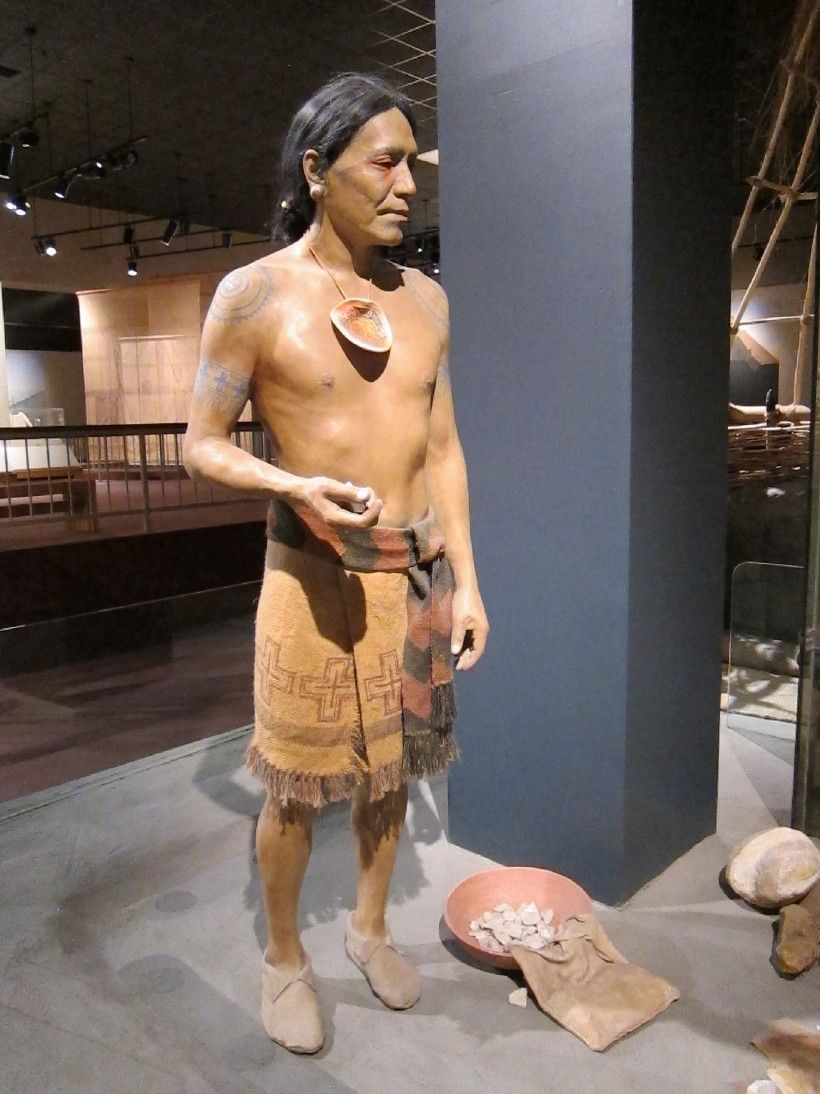
Note the kilt decoration, hair pins, and copper ear spools.
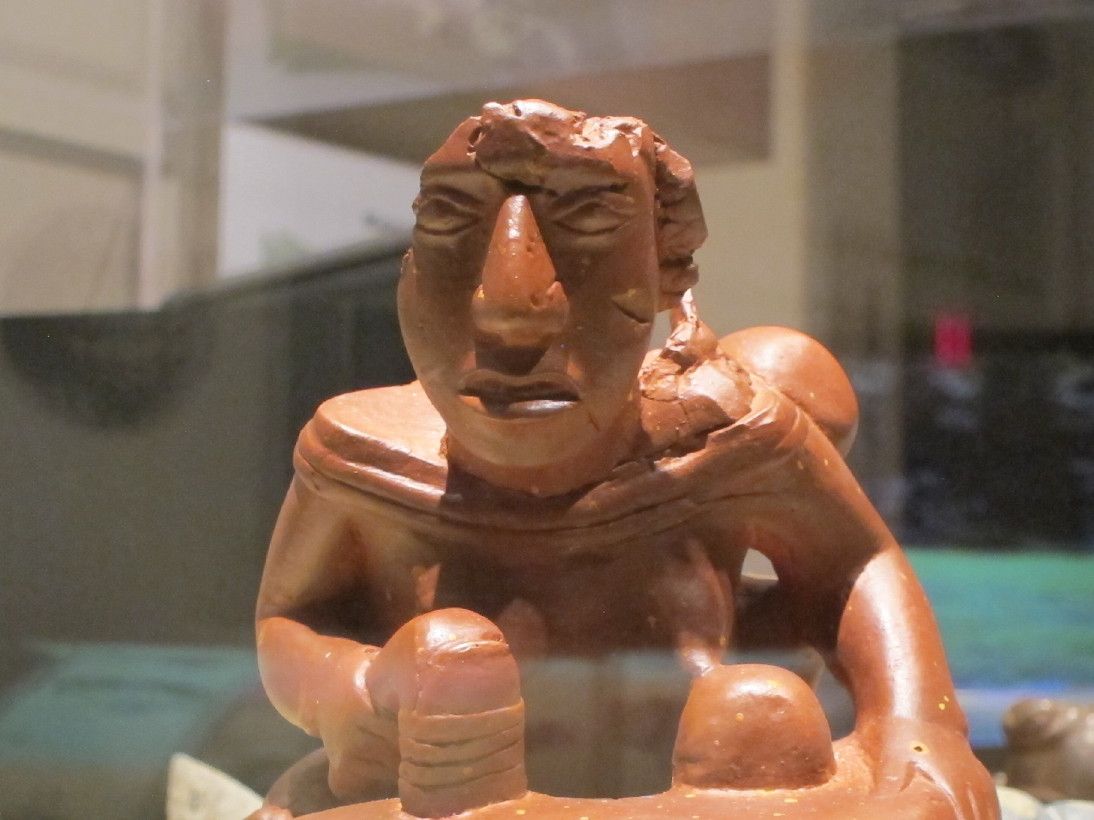
The Mississippian art was quite sophisticated. Here’s a figurine that may represent the “earth mother” or an agricultural deity:
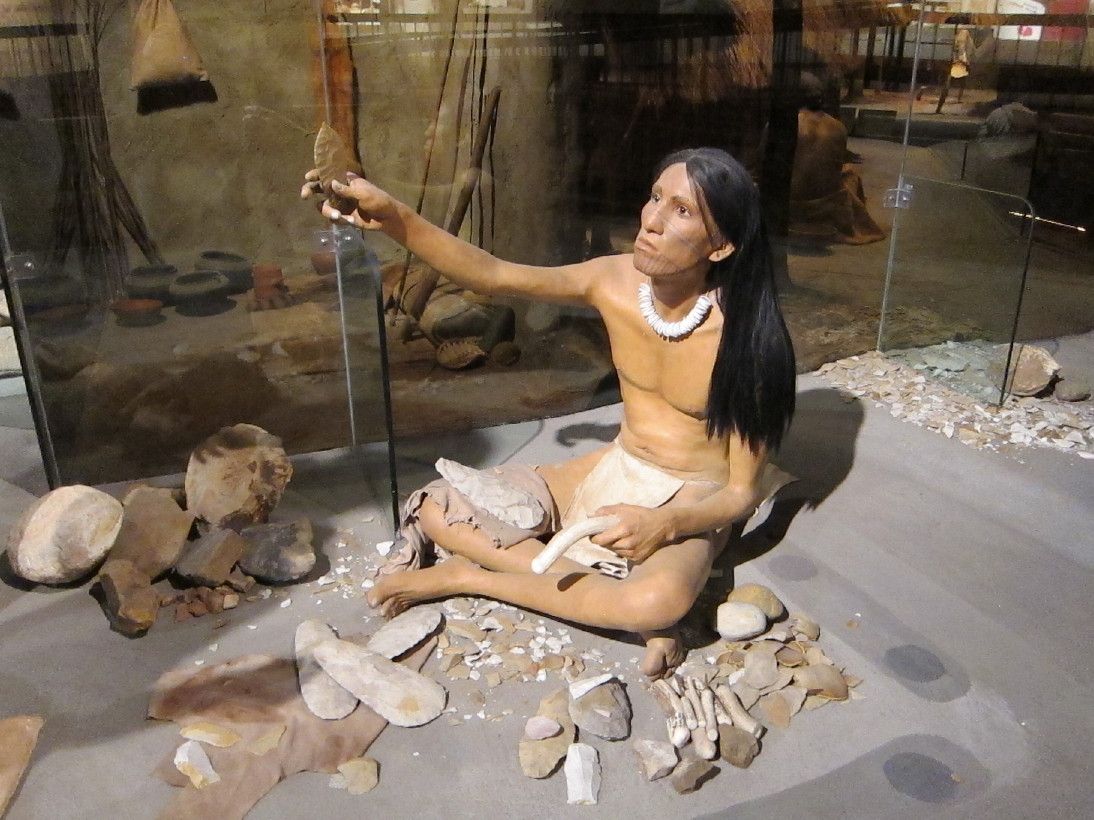
The Mississippian culture was Neolithic. A flintknapper:
A potter:
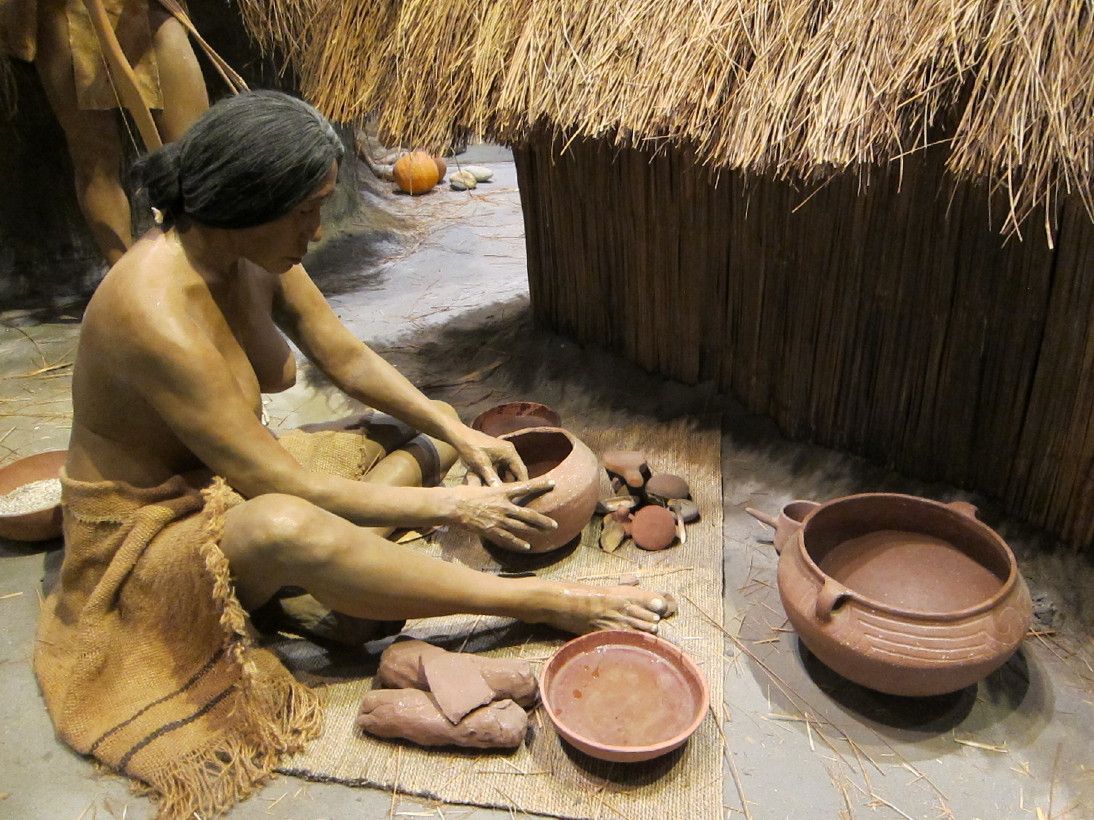
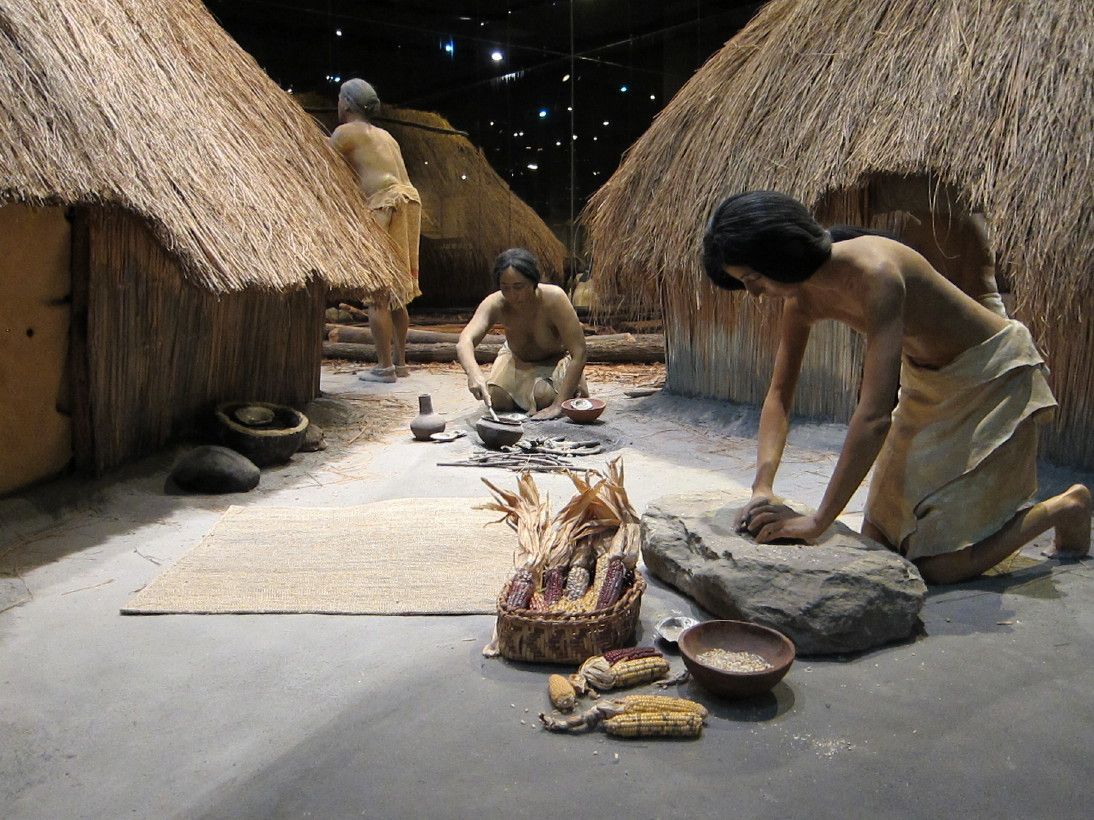
Women preparing food:
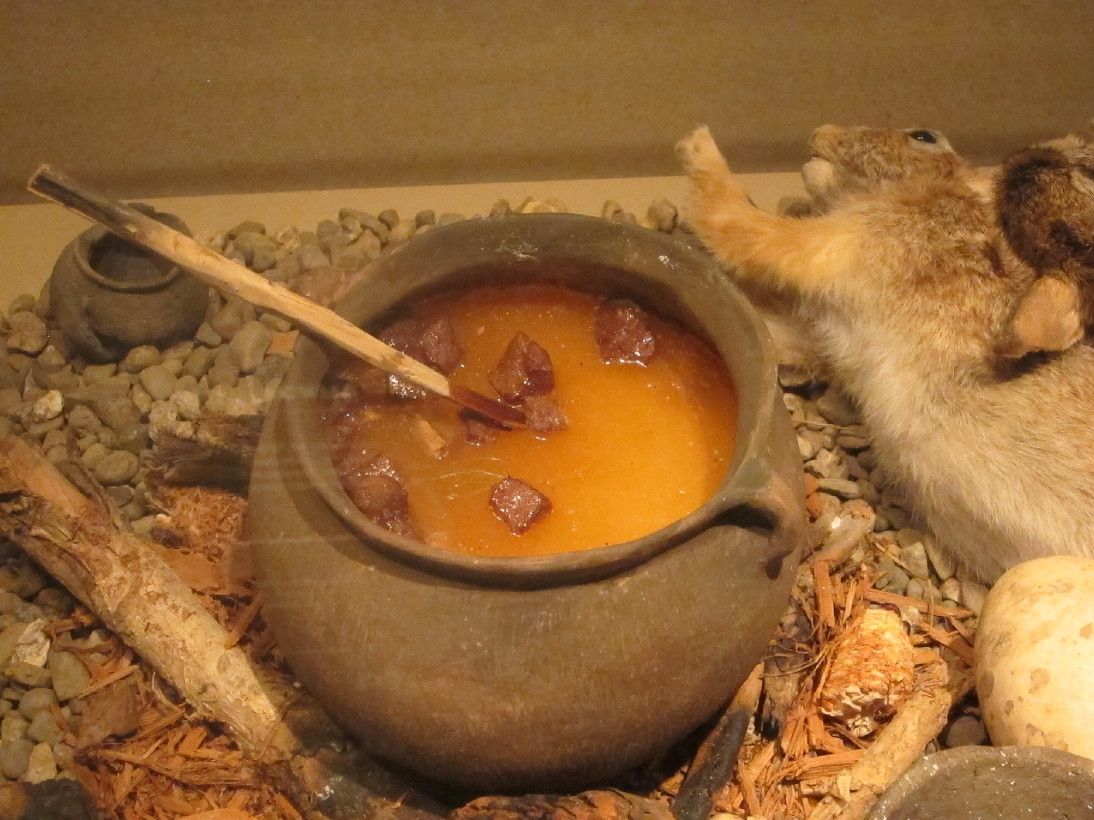
and cooking it:
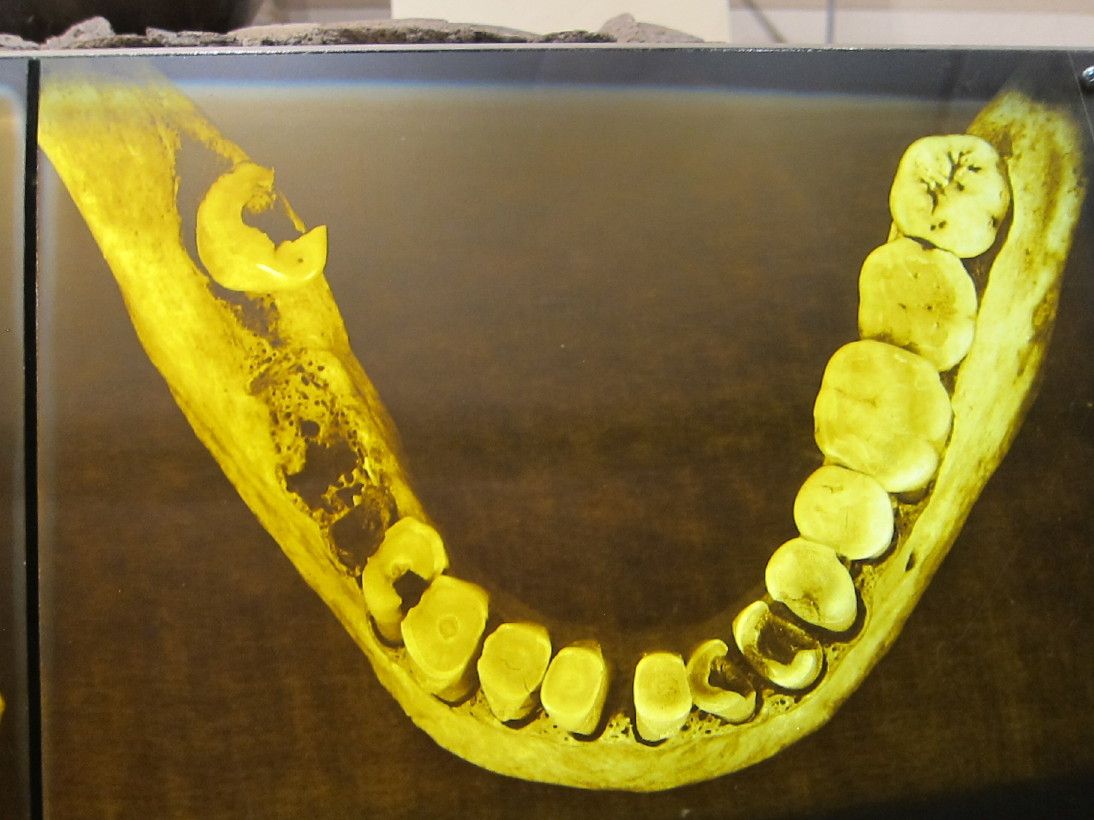
Agricultural diets (in particular, over-reliance on corn) imposed heavy costs on the health of ancient Cahokians, as indicated by tooth decay:
So why did the complex society, centered on Cahokia, collapse? The Interpretive Center lists four possible explanations:
1. Over-exploitation of land
2. Climatic change
3. Failure of leadership
4. Cultural change
Clearly, these folks need to learn about cliodynamics :)
As readers of my books know, the explanation of societal collapse that I have argued for (at least, for societies inhabiting non-marginal environments, including most certainly Cahokia) is internal warfare brought on by a structural-demographic crisis. What is remarkable, is that the Center does not ever mention warfare. When I realized it, I specifically went on the second circuit and checked all exhibits. The only indirect mention of warfare I found was the identification of this individual as a high-status warrior:
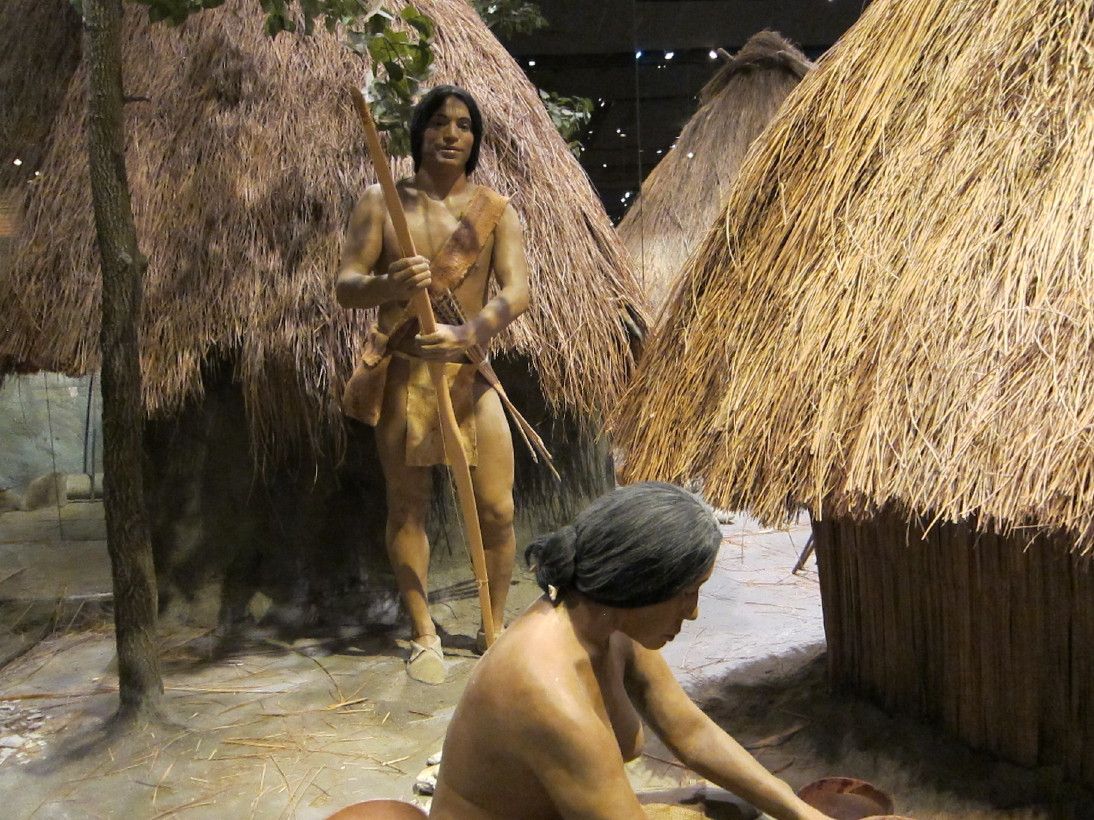
That was it. This is yet another example of what has been called “the pacification of the past.”
Despite this caveat, I thought that the exhibition was really well done. Naturally, much of it is speculative, and the reconstructors surely got many things wrong. But I still feel very grateful to them for making this attempt of bringing the lost culture of pre-Columbian Mississippians to life. I enjoyed my Cahokia trip enormously.

Blog Archive Comments 1 comment Comments originally published with this post. This archive is read-only.
steven t johnson
Eastern North America after 1350 should be understood as a post-apocalyptic landscape, shouldn't it. It is notable that it is not, especially by revisionist historians like Roxane Dunbar-Ortiz, Ned Blackhawk and Pekka Halmalainen (missing the umlauts in his name sorry.) In one sense this may just be the common denialism of catastrophe, in the vein of those who deny the western dark ages, or even the very notion of a fall of Rome. Isn't it better to think of a continuity between civilizations as more the exception? And that much of that continuity was a selective remembering and rationalizing by neighboring cultures and states? For an example, much of the contributions of Persian and central Asian cultures was absorbed by Arabs, then passed on. The so-called Carolingian renaissance so far as I can see owned much to the Arabs, via Spain. The case of Byzantine heritage playing such a role in the Renaissance is well-known, though perhaps over-romanticized.