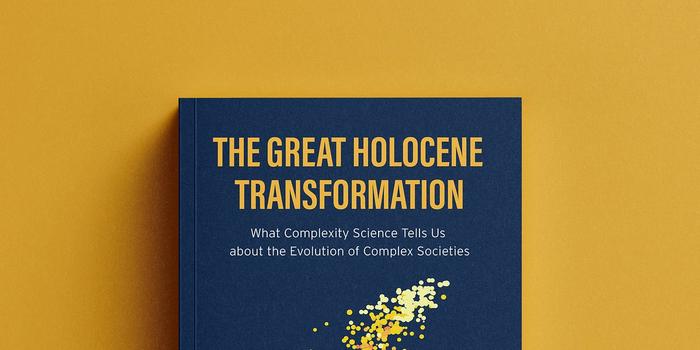
About the Book
Why do the 99.9% of humanity live in large-scale societies organized as states? During the Holocene (the last 10,000 years), human societies have been transformed utterly: from small groups of nomadic foragers to our current interconnected world of large-scale societies organized as states. Population numbers, agricultural productivity, technological development, political and social complexity have all seen spectacular growth. This shift—the Great Holocene Transformation—deserves to be seen as a “Major Evolutionary Transition,” as momentous as the appearance of multicellular life, or the emergence of complex cognition in humans during the Paleolithic era. Why and how did this transformation take place? Past thinkers and modern social scientists have developed myriad theories, and new ones continue to be proposed. Yet we still don’t have a widely accepted answer to the puzzle. The Great Holocene Transformation argues that we are now in a unique position: the tools of complexity science (computational models and big data analytics) coupled with more abundant evidence spanning world history and prehistory now allow us to adjudicate successfully between rival hypotheses, rejecting those that lack empirical and theoretical support. The book provides extensive support for a theory known as Cultural Multilevel Selection (CMLS). CMLS proposes that it was competition between societies that pushed them to scale up and evolve more sophisticated institutions, increasing our capacity to cooperate within ever larger groups of people. This process led both to oppression and inequality within societies, and to the development of institutions and ideologies that promote prosociality and enhance welfare: in short, to the large-scale, complex societies that now dominate the globe.
Review Highlights
“Why did scattered bands of foragers grow into vast empires in just ten millennia? In The Great Holocene Transformation, Peter Turchin tackles what he calls ‘perhaps the biggest question in historical social science’ and answers it with a paradox: war made us cooperative. Drawing on two decades of data from the Seshat Databank, he argues that conflict forged our ultrasociality, the very glue of civilization. Quantitative history, Turchin shows, can reveal the deep patterns behind humanity’s rise and perhaps its next great transformation.” — Laura Spinney, Nature, reviewing The Great Holocene Transformation (Beresta Books, 2025)