Research
Research on long-term social change
Peter Turchin examines how large-scale societies form, remain cohesive, and enter periods of instability. The research draws on mathematical models and comparative historical data, including the Seshat Global History Databank.
Selected Work
Latest Work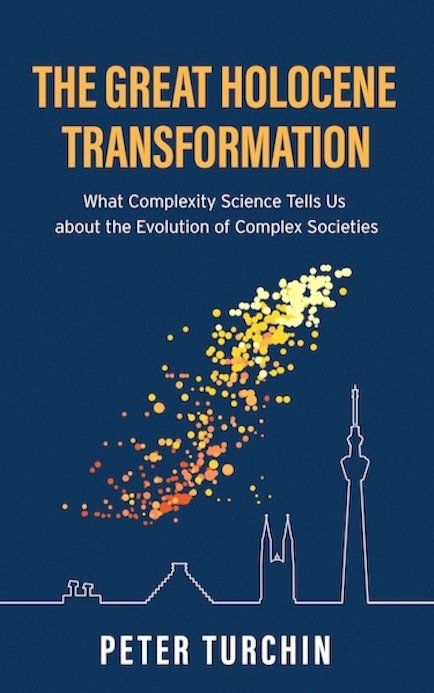
The Great Holocene Transformation
What Complexity Science Tells Us about the Evolution of Complex Societies
Why do the 99.9% of humanity live in large-scale societies organized as states? During the Holocene (the last 10,000 years), human societies have been transformed utterly: from small groups of nomadic foragers to our current interconnected world of large-scale societies organized as states. Population numbers, agricultural productivity, technological…
View BookWhat is society?
Theory and Society
This article engages with Mark Moffett’s proposed definition of society, which emphasizes shared group identification over social interaction, and argues for a different, problem-driven approach to definition in evolutionary social science. Rather than treating definitions as primary, I situate them within the broader research agenda aimed at explaining the Great Holocene Transformation—the dramatic expansion of human societies in scale and complexity over the past 10,000 years. My central analytical focus is on cooperation: the capacity of individuals to coordinate actions toward collective goals despite incentives to free-ride. Accordingly, society is defined here as a collective of individuals engaged in sustained cooperation, with interest group proposed as a more flexible and analytically useful term. Within this framework, polities represent a key subtype of interest groups, characterized by their role as independent political units whose persistence depends on maintaining cooperative cohesion, particularly among elites. Other commonly cited features of societies—such as group identification, territoriality, and intergenerational continuity—are treated as secondary mechanisms that support cooperation rather than defining properties. Ultimately, I argue that flexible, operational definitions are most valuable at intermediate stages of scientific inquiry, where they facilitate the construction and empirical testing of theoretical models.
View Publication
When ripples become tidal waves: Can we predict when the next global crisis will hit?
BBCArticle
ReadLatest Work
Recent publications, books, essays, lectures, scholarly reviews, Substack posts, and media appearances.
A horizon scan of global catastrophic risks
Summary based on the authors’ preprint. The study uses expert elicitation and horizon scanning to prioritize emerging or overlooked threats that could cause global catastrophes. It examines how disruptions can cascade across systems, how threats can interact, and how social and political conditions shape risk. The authors discuss how these findings can inform prevention, mitigation, and adaptation.
Crisis and Resilience in Historical and Modern Societies
A structural-demographic analysis of contemporary Chile
Billet. Perte de cohésion, crise démocratique, digitalisation : comment enrayer la panne du moteur citoyen ?
Jean-Marc Louis s’appuie sur Le Déclin des empires de Peter Turchin pour examiner l’affaiblissement de la cohésion sociale en France et le rôle de l’engagement civique dans la réponse à la crise démocratique.
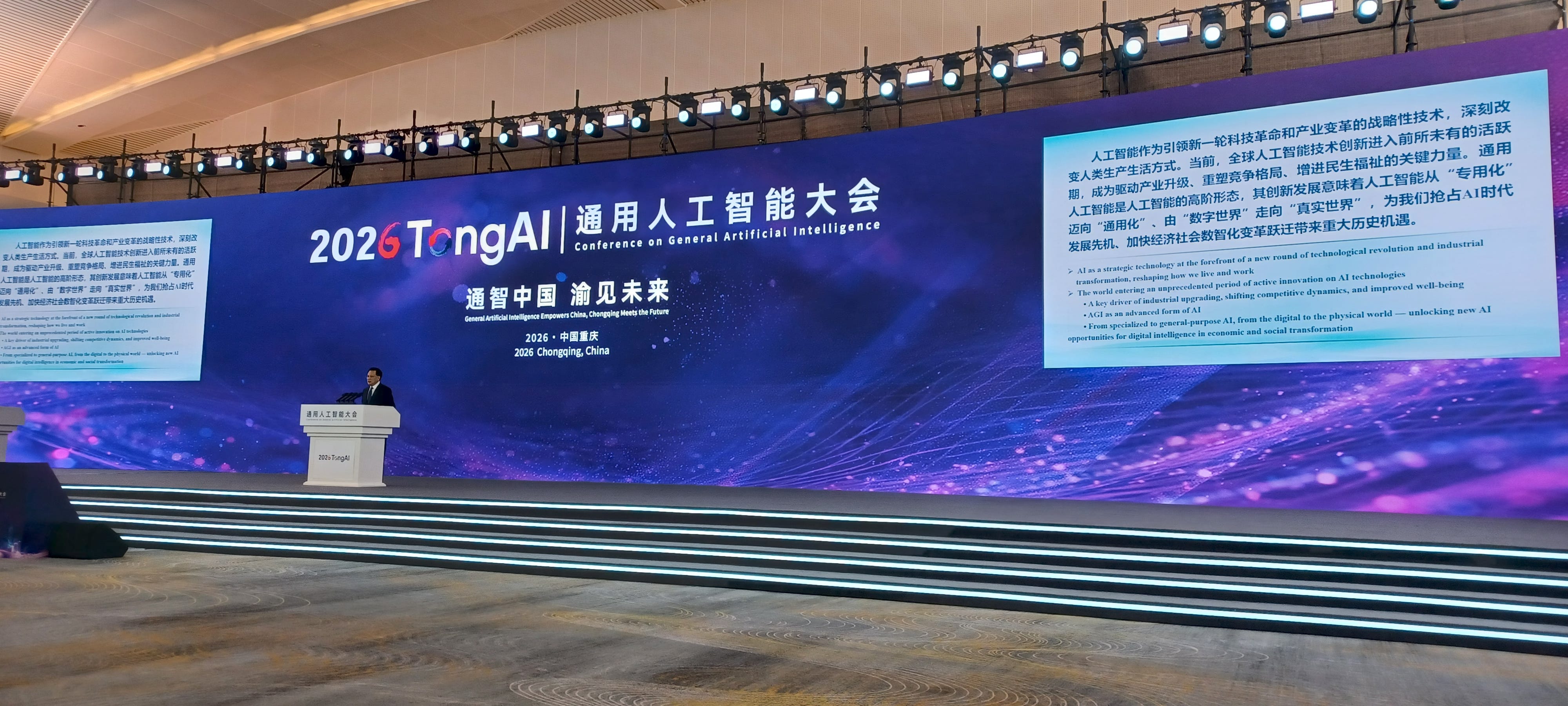
China and AGI
A report on my trip to Chongqing
« La méritocratie n’est qu’une vaste blague » : la colère des jeunes diplômés face au déclassement
Margherita Nasi et Marine Miller enquêtent sur les difficultés d’insertion professionnelle des jeunes diplômés en France. Elles replacent la thèse de la surproduction des élites, développée par Peter Turchin dans Le Chaos qui vient, dans le débat sur l’accès aux études supérieures.
Pourquoi la thèse d’une « surproduction d’élites » passe à côté de la colère des jeunes
Une enquête sur la thèse de la surproduction d’élites, son usage dans le débat français et les objections de sociologues. Peter Turchin y précise son analyse des inégalités et des crises sociales, en s’opposant à la restriction de l’accès à l’université.