Research Field

Cliodynamics

Cliodynamics is a transdisciplinary field for investigating long-term historical change through explicit theory, mathematical and computational models, quantitative analysis, and large comparative databases.

Empires expand and contract, populations and economies rise and fall, and religions spread or recede. Cliodynamics asks what mechanisms generate these processes and whether competing explanations can be evaluated as testable theories.

The Name

Clio and the study of change through time
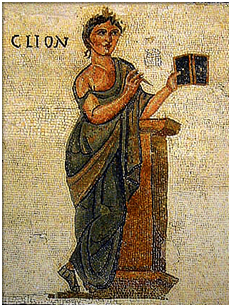
A mosaic depiction of Clio, the classical muse of history, holding a book.
Clio, the muse of history, gives the field the first part of its name.

The name cliodynamics joins Clio, the muse of history, with dynamics, the study of processes that change through time. It signals an approach concerned not only with describing what happened, but with explaining why historical systems move along different trajectories.

Cliodynamics therefore asks whether recurring patterns in population, political organization, economic life, religion, and conflict can be investigated through explicit theories and systematic comparison.

Historical Dynamics

Empires rise and fall; populations and economies boom and bust
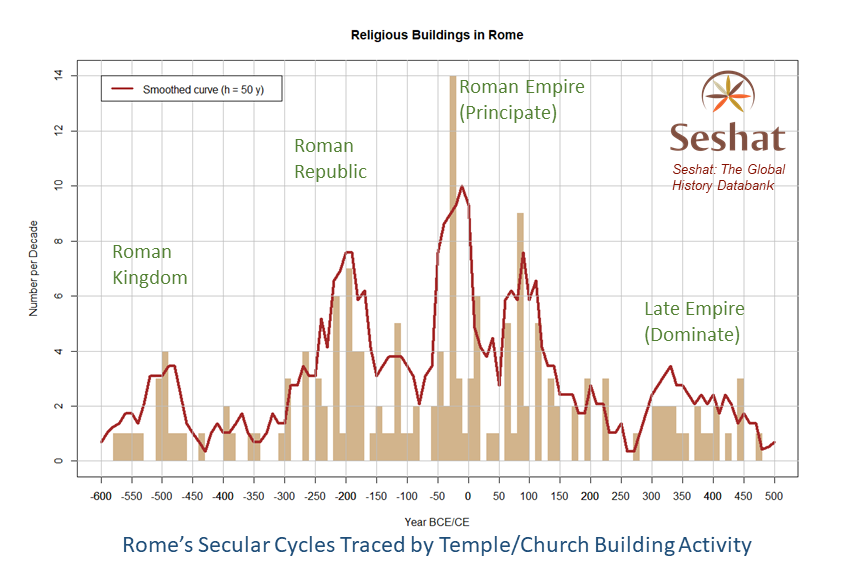
Chart showing religious building activity in Rome from the Roman Kingdom through the late Empire.
A long-run historical time series: religious building activity across successive periods of Roman history.

Historical processes are dynamic: states expand and contract, populations and economies grow and decline, and world religions spread or recede. The central question is which mechanisms generate these changes and whether explanations proposed for one society can illuminate patterns found elsewhere.

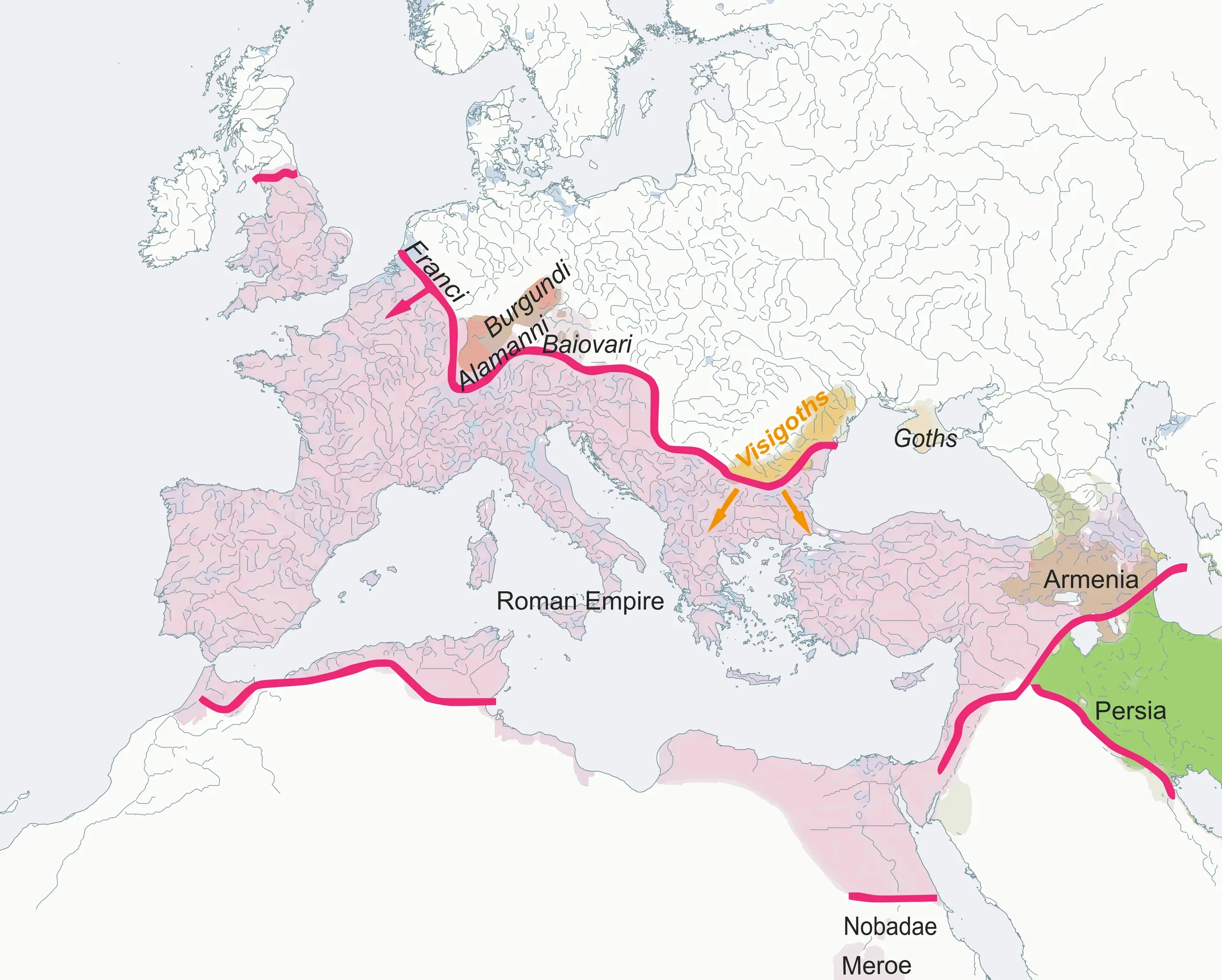
The Roman Empire illustrates the problem. More than two hundred explanations have been proposed for its fall, yet there is still no consensus about which hypotheses are plausible or which general mechanisms explain the collapse of empires.

History as Science

From verbal explanations to empirical tests

Cliodynamics applies the scientific method systematically to history. Verbal theories are translated into mathematical or computational models, their implications are derived precisely, and the resulting predictions are tested against historical and archaeological evidence.

Read the full essay

A Transdisciplinary Field

Models, comparison, and historical knowledge

Cliodynamics lies at the intersection of historical macrosociology, economic history and cliometrics, social and cultural evolution, mathematical modeling, statistical analysis, and the construction of large historical databases.

Its toolkit includes differential-equation models, agent-based simulations, comparative statistics, and reproducible datasets. These are not ends in themselves. The aim is to discover general principles that help explain the functioning and dynamics of actual historical societies.

Research Community

A cumulative field needs shared evidence and scholarly exchange

The community working on mathematical history and cliodynamics has grown into a wider research field. Seshat: Global History Databank supports comparative tests of theories about social evolution and crisis, while Cliodynamics: The Journal of Quantitative History and Cultural Evolution provides a venue for quantitative history, formal modeling, and empirical research on long-term change.

Together, shared data, explicit models, and scholarly publication make it possible to move from isolated explanations toward cumulative debate and progressively better historical theories.
Selected Work

Selected work in Cliodynamics

Selected work central to Cliodynamics.

All Cliodynamics work
Book

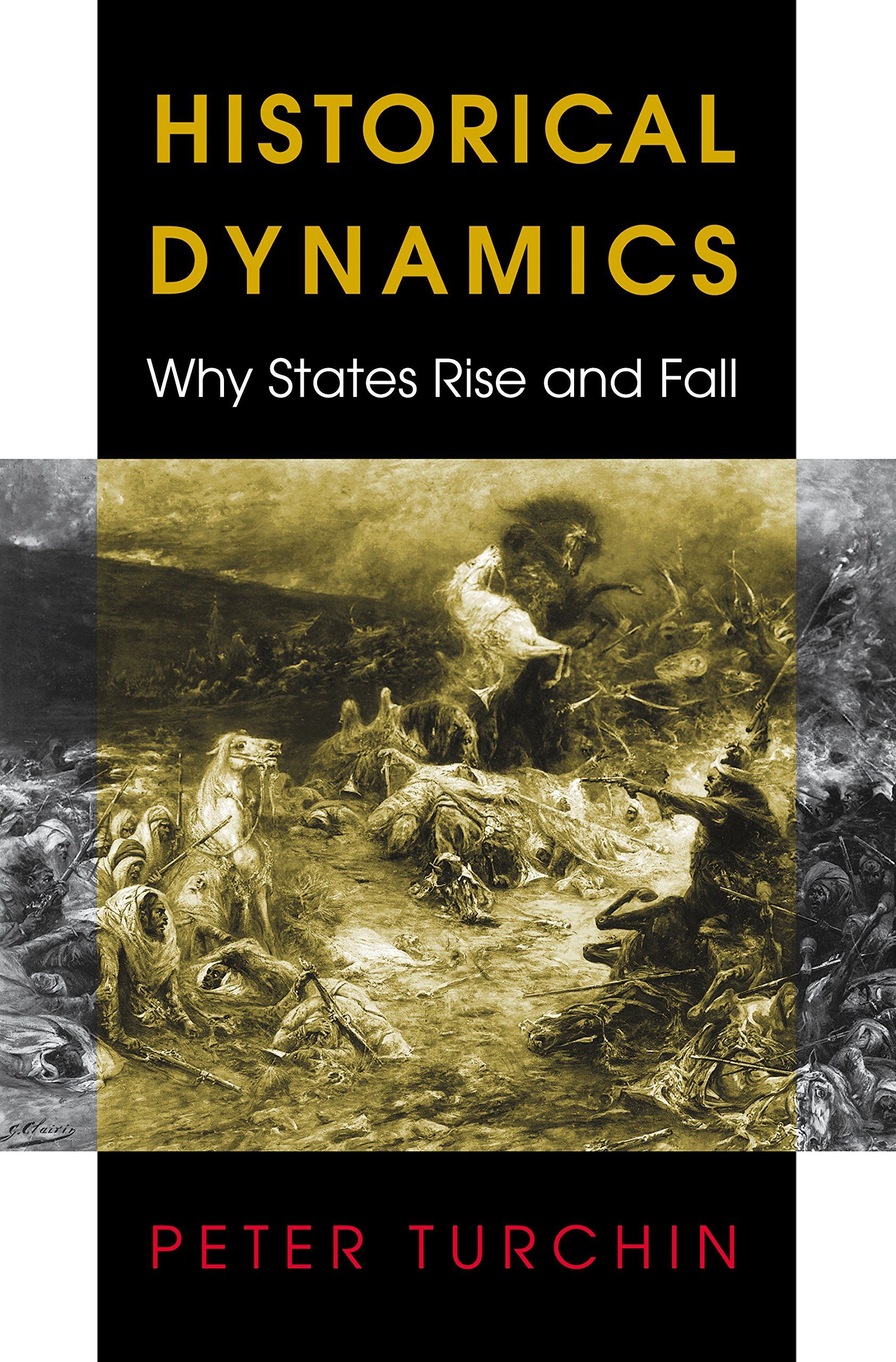
Historical Dynamics

Oct 19, 2003Turchin, P.

A Synthetic Approach to Historical Expansions and Contractions through Mathematical Modeling and Empirical Analysis

Why States Rise and Fall Many historical processes are dynamic. Populations grow and decline. Empires expand and collapse. Religions spread and wither. Natural scientists have made great strides in understanding dynamical processes in the physical and biological worlds using a synthetic approach that combines mathematical modeling with statistical…

Princeton University PressCliodynamicsStates and Empires
Publication

Arise 'cliodynamics'

Jul 2, 2008Turchin, P.

If we are to learn how to develop a healthy society, we must transform history into an analytical, predictive science, argues Peter Turchin. He has identified intriguing patterns across vastly different times and places. What caused the collapse of the Roman Empire? More than 200 explanations have been proposed1, but there is no consensus about which explanations are plausible and which should be rejected. This situation is as risible as if, in physics, phlogiston theory and thermodynamics coexisted on equal terms. This state of affairs is holding us back. We invest in medical science to preserve the health of our bodies, and in environmental science to maintain the health of ecosystems. Yet our understanding of what makes societies healthy is in the pre-scientific stage. Sociology that focuses on the past few years or decades is important. In addition, we need a historical social science, because processes that operate over long timescales can affect the health of societies. It is time for history to become an analytical, and even a predictive, science.

NatureCliodynamics
Academic TalkYouTube

Peter Turchin, Cliodynamics: History as Science

Jul 10, 2023

Peter Turchin, Cliodynamics: History as Science Presented to the 2023 IBHA Conference https://bighistory.org/

IBHA International Big History AssociationCliodynamicsCultural Evolution
Book

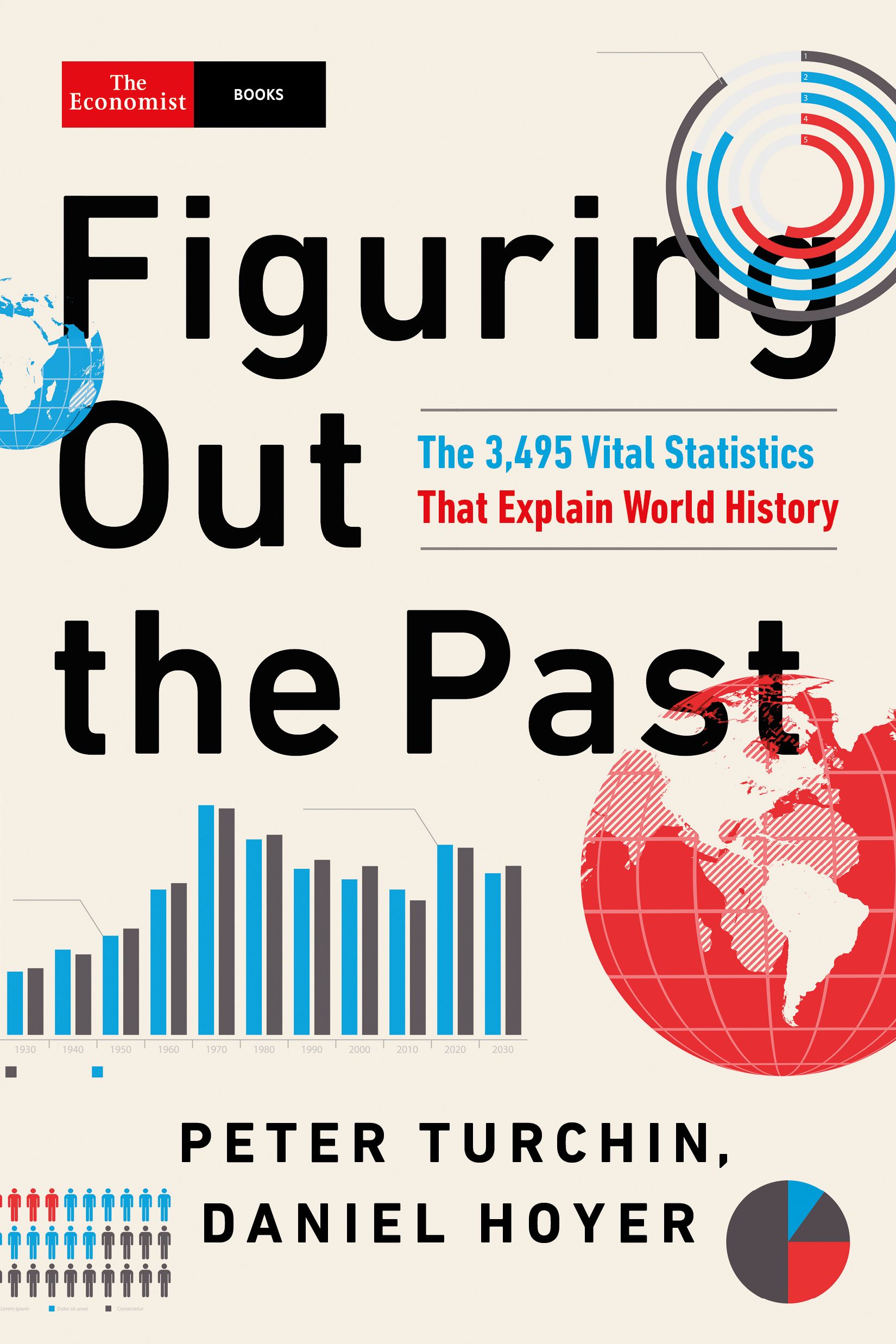
Figuring Out the Past: The 3,495 Vital Statistics that Explain World History

Nov 17, 2020Turchin, P., Hoyer, D.

Discover the world records that define our history and jump headfirst into the past using scientific data that reveals accurate and insightful answers to life’s biggest questions.

What was history's biggest empire? Or the tallest building of the ancient world? What was the plumbing like in medieval Byzantium? The average wage in the Mughal Empire? Where did scientific writing first emerge? What was the bloodiest ever ritual human sacrifice? We are used to thinking about history in terms of stories. Yet we understand our own world…

PublicAffairsHistorical DatabasesCliodynamics