Research Topic
Social Complexity
The growth, organization, integration, and fragility of large-scale human societies and their political institutions.
Work on Social Complexity
Current Research Projects
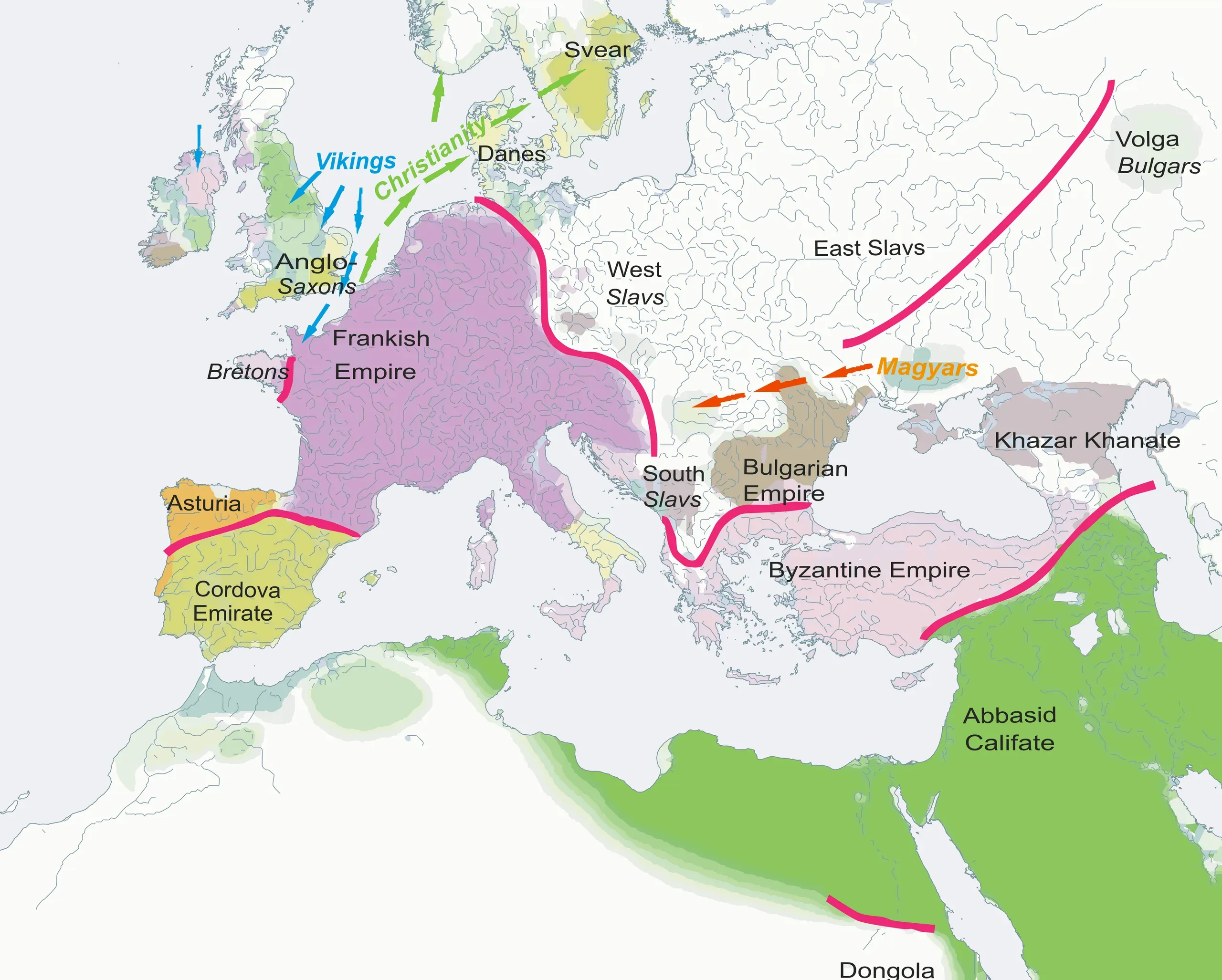
Combining quantitative analysis with large historical datasets, Peter Turchin and collaborators study how complex societies evolve, why they periodically enter crisis, and why some recover while others undergo severe breakdown.
What is society?
This article engages with Mark Moffett’s proposed definition of society, which emphasizes shared group identification over social interaction, and argues for a different, problem-driven approach to definition in evolutionary social science. Rather than treating definitions as primary, I situate them within the broader research agenda aimed at explaining the Great Holocene Transformation—the dramatic expansion of human societies in scale and complexity over the past 10,000 years. My central analytical focus is on cooperation: the capacity of individuals to coordinate actions toward collective goals despite incentives to free-ride. Accordingly, society is defined here as a collective of individuals engaged in sustained cooperation, with interest group proposed as a more flexible and analytically useful term. Within this framework, polities represent a key subtype of interest groups, characterized by their role as independent political units whose persistence depends on maintaining cooperative cohesion, particularly among elites. Other commonly cited features of societies—such as group identification, territoriality, and intergenerational continuity—are treated as secondary mechanisms that support cooperation rather than defining properties. Ultimately, I argue that flexible, operational definitions are most valuable at intermediate stages of scientific inquiry, where they facilitate the construction and empirical testing of theoretical models.
CCS 26 Keynote : The Great Holocene Transformation
During the Holocene the scale and complexity of human societies increased dramatically. Generations of scholars have proposed different theories explaining this evolution, which range from functionalist explanations, focusing on the provision of public goods, to conflict theories, emphasizing the role of internal class struggle or external warfare.…
Social complexity promotes cooperation and functional integration in large-scale societies
How do large-scale human societies maintain functional integration? Over the last 12,000 years, polities grew over six orders of magnitude in population, far exceeding the scale at which the interpersonal mechanisms that promote cooperation in small-scale societies can operate. Here we test the hypothesis that cooperation and functional integration in large-scale societies is promoted by social (and, specifically, institutional) complexity. We model large-scale societies as territorial social networks subject to energetic, cognitive, and competitive constraints. We demonstrate that agricultural intensification generates increasing population density, raising the per capita rate of social interaction beyond what small-scale mechanisms can sustain and requiring institutional rules to substitute for interpersonal knowledge. The model predicts that territory and social complexity scale with polity population with exponents of 5/6 and 1/6. Tests against data describing hundreds of polities spanning the Holocene support these predictions, providing quantitative evidence that social complexity is a central integrative mechanism enabling large-scale human cooperation.
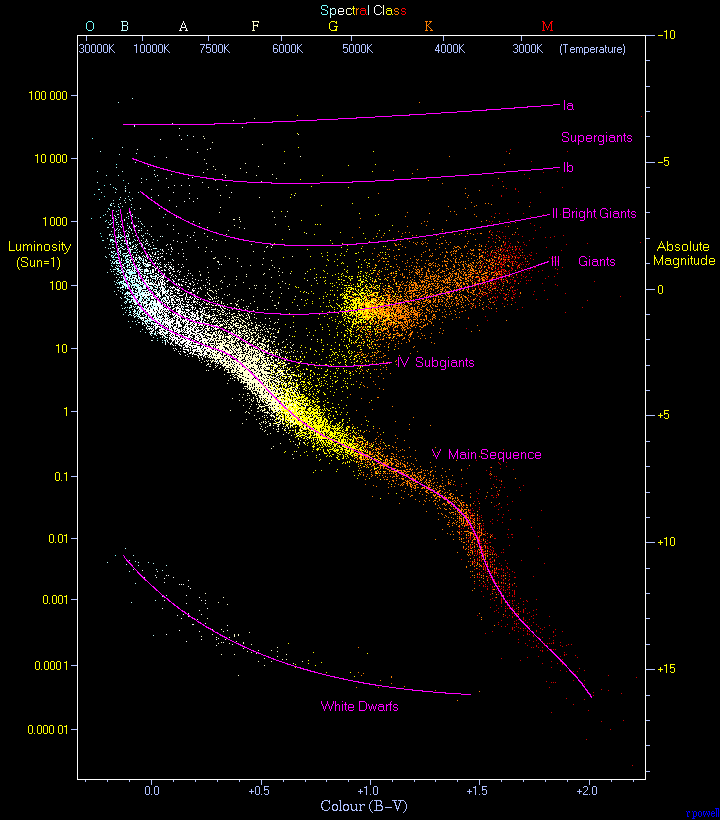
The "Main Sequence" of Societal Evolution
Interesting Parallels between Stars and Human Societies

Civilization without God
Religion and the Evolution of Complex Societies
Peter Turchin: The Collapse of Complex Societies, Elite Overproduction, and Social Unrest
Dr. Peter Turchin is Emeritus Professor at the University of Connecticut in the departments of ecology and evolutionary biology, anthropology, and mathematics. He is a project leader at the Complexity Science Hub Vienna and a research associate at the School of Anthropology at the University of Oxford.…
Can We Predict History like the Weather? | Peter Turchin on Cliodynamics and Zohran Mamdani
Why do civilizations rise, prosper, and then collapse? Here's what the math tells us. In this episode, we sit down with Peter Turchin, complexity scientist and founder of the field of cliodynamics, which uses data and mathematical models to study the long-term cycles of history.…
New Study Uncovers How War Fueled the Rise of Complex Societies
In an ambitious leap forward for the scientific understanding of human societal evolution, Peter Turchin, a leading complexity scientist, unveils groundbreaking insights in his new book, The Great Holocene Transformation.…

Hundreds of societies have been in crises like ours. An expert explains how they got out.
An analysis of historical crises over the past 2,000 years offers lessons for avoiding the end times. Anti-establishment parties and politicians are surging in Western Europe and Japan. In the United States, the MAGA movement, led by President Donald Trump, has seized power.…
What drove the rise of civilizations? A decades-long quest points to warfare
The Great Holocene Transformation: What Complexity Science Tells Us about the Evolution of Complex Societies Peter Turchin Beresta Books (2025) An ambitious analysis of a vast trove of data from 800 societies around the world concludes that there’s safety in numbers. When Spanish conquistador Hernán Cortés arrived in Mexico in 1519, he found monarchs,…
The Great Holocene Transformation
What Complexity Science Tells Us about the Evolution of Complex Societies
Why do the 99.9% of humanity live in large-scale societies organized as states? During the Holocene (the last 10,000 years), human societies have been transformed utterly: from small groups of nomadic foragers to our current interconnected world of large-scale societies organized as states. Population numbers, agricultural productivity, technological…
Peter Turchin - The Holoscene Transformation
The Great Holocene Transformation What Complexity Science Tells Us about the Evolution of Complex Societies?
Soil Fertility Depletion is not a Credible Mechanism for Population Boom/Bust Cycles in Early Agricultural Societies
Soil fertility depletion presents a negative feedback mechanism that could have impacted early adopters of agriculture. We consider whether such feedback can lead to population cycles among early agriculturalists, such as the boom-and-bust patterns suggested by an increasing amount of evidence for Neolithic Europe. Using general mathematical arguments, we show that this is unlikely, due to the interplay of two factors. First, there is an important mathematical difference between biotic (i.e., logistic) and abiotic resource replenishment; soil nutrients are better modeled by the abiotic case, which leads to more stable dynamics. Second, under realistic conditions, the resource replenishment process operates on fast time scales compared to attainable population growth rates, reinforcing the tendency towards stable dynamics. Both these factors are relevant for early agricultural societies and imply that nutrient depletion is likely not the main contributing factor to boom-and-bust cycles observed in the archaeological record.
Angst vor Krieg veränderte jungsteinzeitliche Bevölkerungsentwicklung (German)
Die Ausbreitung der europäischen Bevölkerung in der Jungsteinzeit war kein linearer Prozess. Warum es immer wieder Schwankungen zwischen starkem Wachstum und schnellen Rückgängen gab, ist bis heute teilweise unklar.…

New Research Reveals Fear’s Hidden Role in Shaping Early Civilizations
Historically, scholars have focused on the direct impact of environmental and social issues like war and famine. However, more abstract concerns, such as fear, have often been overlooked. However, recent research suggests that fear should be considered alongside conflict, climate change, and other significant factors that likely influenced the development…
Landscape of fear: indirect effects of conflict can account for large-scale population declines in non-state societies
The impact of inter-group conflict on population dynamics has long been debated, especially for prehistoric and non-state societies. In this work, we consider that beyond direct battle casualties, conflicts can also create a ‘landscape of fear’ in which many non-combatants near theatres of conflict abandon their homes and migrate away. This process causes population decline in the abandoned regions and increased stress on local resources in better-protected areas that are targeted by refugees. By applying analytical and computational modelling, we demonstrate that these indirect effects of conflict are sufficient to produce substantial, long-term population boom-and-bust patterns in non-state societies, such as the case of Mid-Holocene Europe. We also demonstrate that greater availability of defensible locations act to protect and maintain the supply of combatants, increasing the permanence of the landscape of fear and the likelihood of endemic warfare.

History’s crisis detectives: How we’re using maths and data to reveal why societies collapse – and clues about the future
American humorist and writer Mark Twain is believed to have once said, “History doesn’t repeat itself, but it often rhymes.” I’ve been working as a historian and complexity scientist for the better part of a decade, and I often think about this phrase as I follow different strands of the historical record and notice the same patterns over and over. My…