Research Topic
Political Instability
Long-term pressures associated with political violence, revolution, state breakdown, and periods of social disintegration.
Work on Political Instability
Age of Discord II
A structural-demographic analysis of long-term changes in American well-being, elite competition, state capacity, and political instability.
Structural-Demographic Theory
Structural-demographic theory was developed by Goldstone and others (Nefedov 2003, Turchin 2003, Korotayev et al. 2011) as a tool for understanding long-term social pressures that lead to revolutions, civil wars, and other major outbreaks of socio-political instability.
Peter Turchin, Overproduction of Elites and Social Instability
Overproduction of Elites and Social Instability A Short Introduction to Cliodynamics A conversation with Peter Turchin Project Leader at the Complexity Science Hub, Vienna

Cliodynamics of End Times II
Coin Hoards Give Us a Quantitative Proxy for Instability Dynamics

When ripples become tidal waves: Can we predict when the next global crisis will hit?
Spotting the events that might lead to a major period of upheaval is notoriously difficult. Could artificial intelligence be the crystal ball we need? Four hundred years ago in what is now the Czech Republic, tossing your enemy out of a window was a dramatic way to make a political statement.…
Below the Surface: the Structural-Demographic Roots of the Current Political Crisis
A blog post I wrote in 2013
Cliodynamics of End Times I
Complex Dynamics of Political Instability
Decapitating Top Political Leadership: Does It Work?
An Unsystematic Historical Survey

Our Revolution: an Interim Assessment
A Chronicle of Revolution (ACOR6)
The author of "Elite Overproduction Will Destroy a Nation" talks about the world and Japan in 2026 (Japanese)
The theory advocates structural-demographic theory (SDT), which explains how large societies organized as nation-states periodically experience political instability due to polarization, social divisions, and institutional dysfunction.…
À New York, la victoire de Zohran Mamdani et des « précaires diplômés »
Le nouveau maire socialiste de la ville-monde porte aussi la colère des citoyens éduqués frustrés de ne pas accéder à l’élite.

Zohran Mamdani y la revuelta del precariado cualificado
La victoria del candidato socialista en Nueva York se vio impulsada en gran medida por los precarios con titulación: jóvenes con título universitario o superior que ganan lo justo para sobrevivir. La principal noticia política de la semana es la victoria de Zohran Mamdani en las elecciones a la alcaldía de Nueva York.…

„Die USA sind mitten in einer Revolution“
Komplexitätsforscher Peter Turchin hat schon vor Jahren einen politischen Umbruch in den USA vorhergesagt. Mit einer baldigen Beruhigung der Lage sei nicht zu rechnen.

Hundreds of societies have been in crises like ours. An expert explains how they got out.
An analysis of historical crises over the past 2,000 years offers lessons for avoiding the end times. Anti-establishment parties and politicians are surging in Western Europe and Japan. In the United States, the MAGA movement, led by President Donald Trump, has seized power.…

Ignacio Urquizu, tras el asesinato de Charlie Kirk: "Hace un año ya se decía que EEUU iba camino de una guerra civil"
El profesor de sociología Ignacio Urquizu alude al libro del politólogo Peter Turchin, Élites, contraélites y el camino a la desintegración política, publicado hace un año, para contextualizar y explicar los recientes acontecimientos en EEUU. En el vídeo, los detalles.
Young, angry, educated — and raring to rebel
New York’s Democratic mayoral hopeful Zohran Mamdani taps into an energy mirrored in Corbynism: overqualified graduates who are pro-rent control, anti-Israel and agitating for change
CRISES AVERTED. How A Few Past Societies Found Adaptive Reforms in the Face of Structural-Demographic Crises
Historians and social scientists have long been preoccupied with understanding and documenting periods of crisis. Such emphasis is only growing, and becoming more pressing, as the world continues to face a number of interrelated stressors in the form of irreversible climate change, major ecological shocks and disease outbreaks, eruptions of military violence, economic disruptions and deepening inequalities, political polarization and unrest, the rise of authoritarian and nationalist regimes. Crises in these domains are not new, but have been recurrent features of past societies. Although these periods have typically led to massive loss of life, the failure of critical institutions, and even complete societal collapse, there are instances in the historical record of societies managing to turn the tide of crisis even as violence and social turmoil grow. Here, we focus on four such cases of crises mitigated with structural reforms revealed from our previous historical analyses: early Republican Rome, mid-19th century England and Russia, USA during the the late 20th to early 21st centuries. Utilizing structural demographic theory as a lens to explore these cases, we seek to expose the pressures that built up leading to crisis and the early signs of violent confrontation revealed by these societies, as well as to examine the conditions and key decisions made in the midst of this unrest that allowed these societies to turn the tide and enact significant structural adaptations. Our findings have clear relevance to understanding and navigating similar crises in contemporary societies.
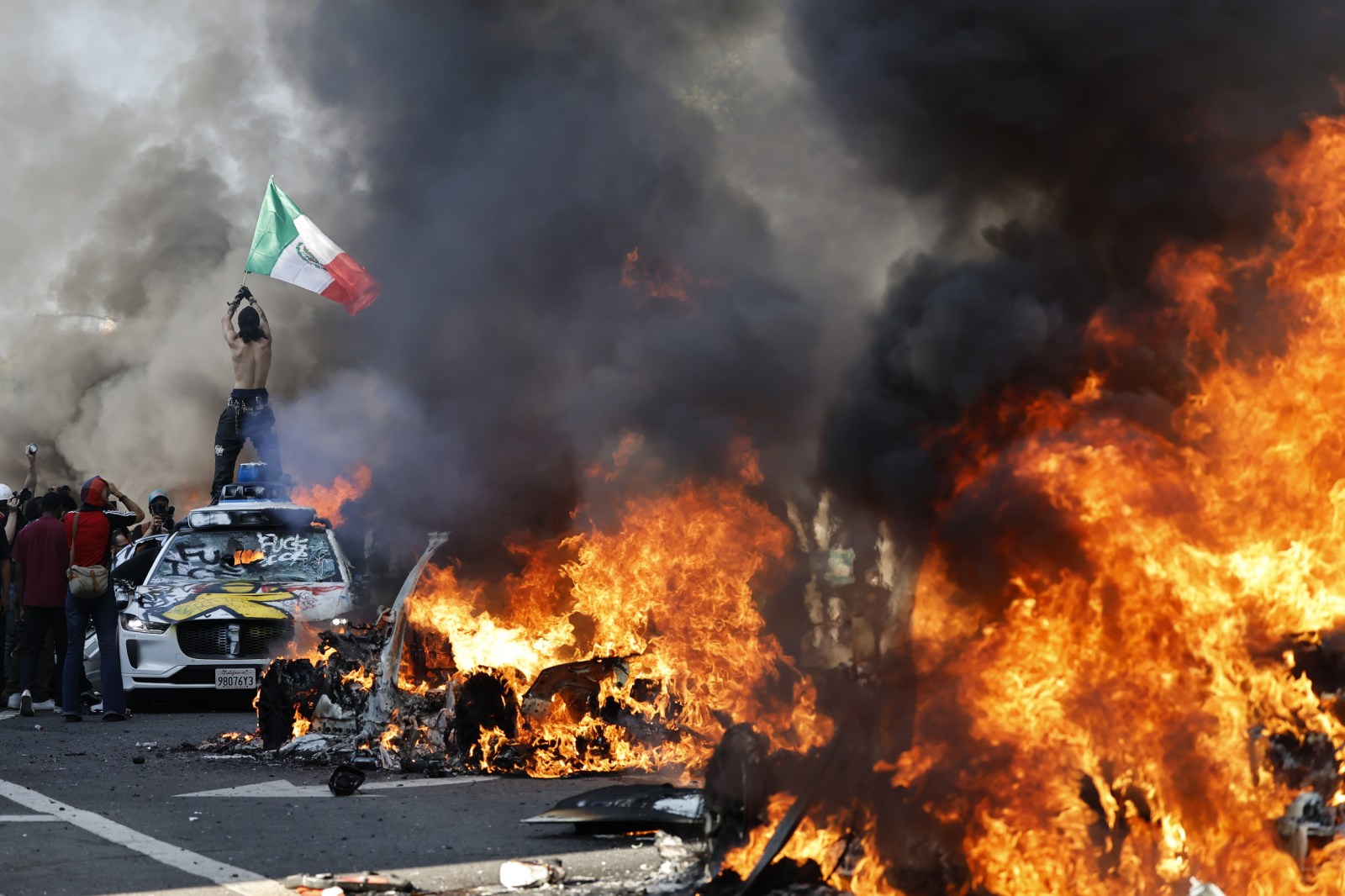
The Scholar Who Predicted America's Breakdown Says It's Just Beginning
Fifteen years ago, smack in the middle of Barack Obama's first term, amid the rapid rise of social media and a slow recovery from the Great Recession, a professor at the University of Connecticut issued a stark warning: the United States was heading into a decade of growing political instability. It sounded somewhat contrarian at the time.…