Authors
Giuseppe Dal Prá, Christopher Y.C. Chan, Timur Burkhanov, Nathaniel Cooke, Constantin W. Arnscheidt, Roger Cremades, Carla Z. Cremer, Victor Galaz, Ajay Gambhir, Katie Heikkinen, Michael Hinge, Daniel Hoyer, Florian U. Jehn, Paul Larcey, Luke Kemp, Patrick W. Keys, Emad Kiyaei, Steven J. Lade, David Manheim, David A. McKay, Divya Pandey, Tom Pegram, Viktoria Spaiser, Kolfinna Tómasdóttir, Peter Turchin, Saskia E. Werners, Mark Workman, Nico Wunderling, Hiromi Yamashita, William J. Sutherland
Abstract
Summary based on the authors’ preprint. The study uses expert elicitation and horizon scanning to prioritize emerging or overlooked threats that could cause global catastrophes. It examines how disruptions can cascade across systems, how threats can interact, and how social and political conditions shape risk. The authors discuss how these findings can inform prevention, mitigation, and adaptation.
Journal
One Earth
Publication Details
pp. 101873
Cite This Publication
Dal Prá, G., Chan, C. Y. C., Burkhanov, T., Cooke, N., Arnscheidt, C. W., Cremades, R., Cremer, C. Z., Galaz, V., Gambhir, A., Heikkinen, K., Hinge, M., Hoyer, D., Jehn, F. U., Larcey, P., Kemp, L., Keys, P. W., Kiyaei, E., Lade, S. J., Manheim, D., … Sutherland, W. J. (2026). A horizon scan of global catastrophic risks. One Earth, Article 101873. https://doi.org/10.1016/j.oneear.2026.101873
Connections
Related work
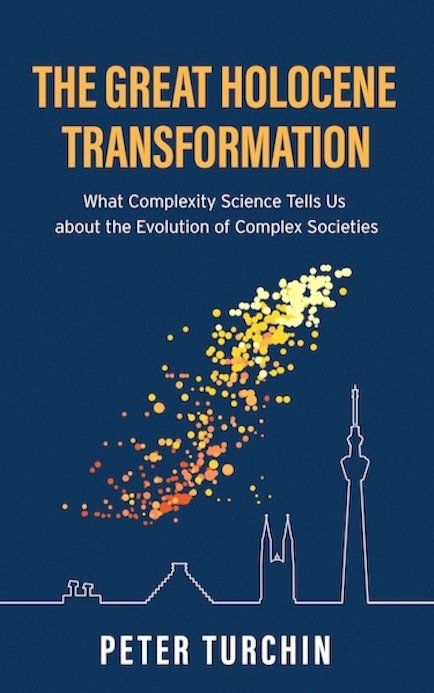
The Great Holocene Transformation
What Complexity Science Tells Us about the Evolution of Complex Societies
Why do the 99.9% of humanity live in large-scale societies organized as states? During the Holocene (the last 10,000 years), human societies have been transformed utterly: from small groups of nomadic foragers to our current interconnected world of large-scale societies organized as states. Population numbers, agricultural productivity, technological…
End Times
Elites, Counter-Elites, and the Path of Political Disintegration
From the pioneering co-founder of cliodynamics, the groundbreaking new interdisciplinary science of history, a big-picture explanation for America's civil strife and its possible endgames Peter Turchin, one of the most interesting social scientists of our age, has infused the study of history with approaches and insights from other fields for more than a…
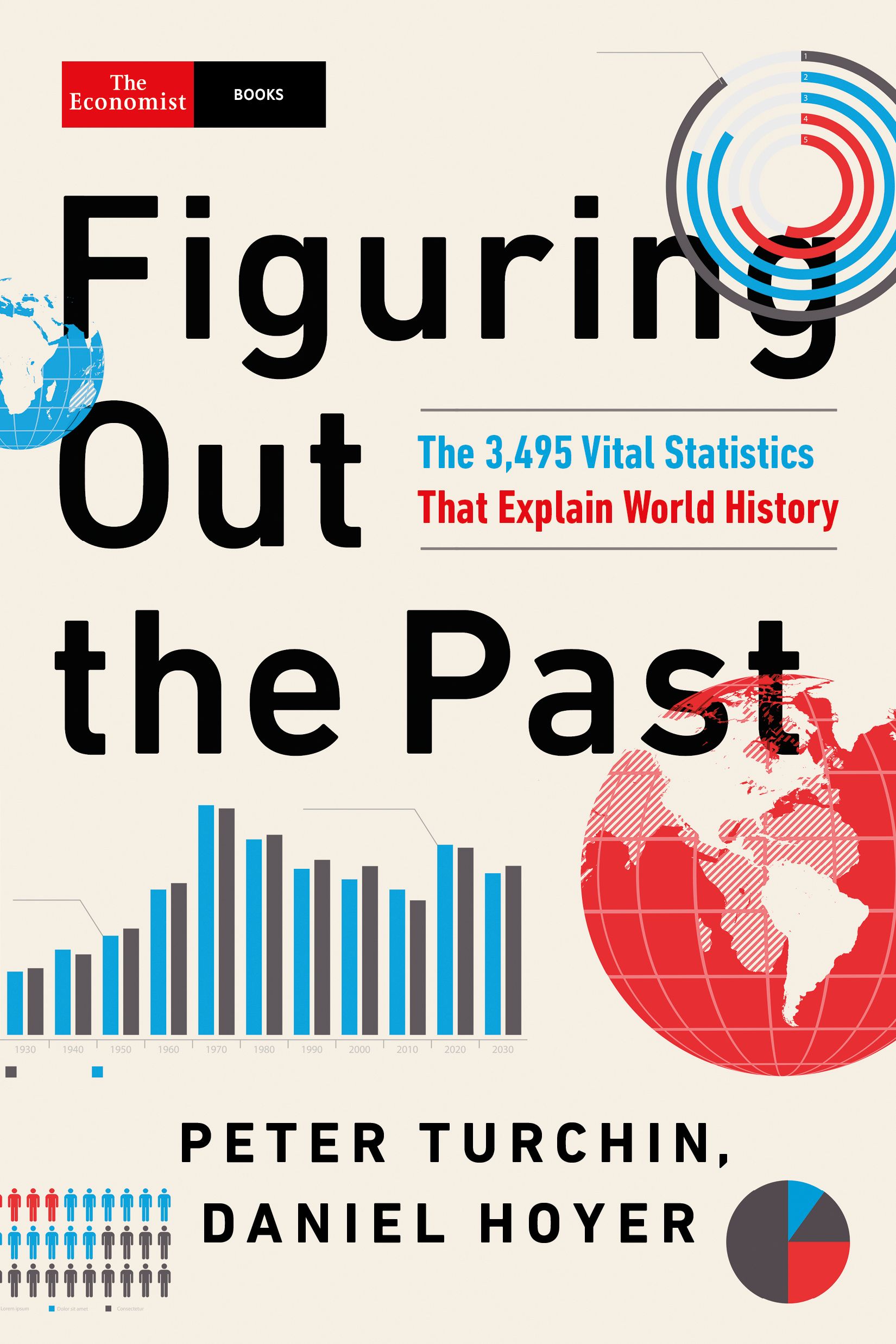
Figuring Out the Past: The 3,495 Vital Statistics that Explain World History
Discover the world records that define our history and jump headfirst into the past using scientific data that reveals accurate and insightful answers to life’s biggest questions.
What was history's biggest empire? Or the tallest building of the ancient world? What was the plumbing like in medieval Byzantium? The average wage in the Mughal Empire? Where did scientific writing first emerge? What was the bloodiest ever ritual human sacrifice? We are used to thinking about history in terms of stories. Yet we understand our own world…
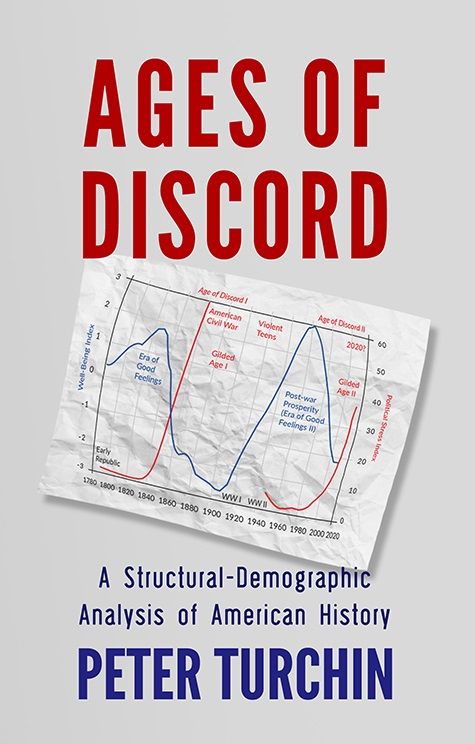
Ages of Discord
A Structural-Demographic Analysis of American History
The real wage of a US worker today is less than it was 40 years ago—but there are four times as many multimillionaires. As inequality grows, the politics become more poisonous. Every year, more and more Americans go on shooting sprees, killing strangers and passers-by—and now, increasingly, representatives of the state. Troubling trends of this kind are…

Ultrasociety
Cooperation is powerful
We organize ourselves into communities of hundreds of millions of individuals, inhabit every continent, and send people into space. Human beings are nature’s greatest team players. And the truly astounding thing is, we only started our steep climb to the top of the rankings—overtaking wasps, bees, termites and ants—in the last 10,000 years. Genetic…
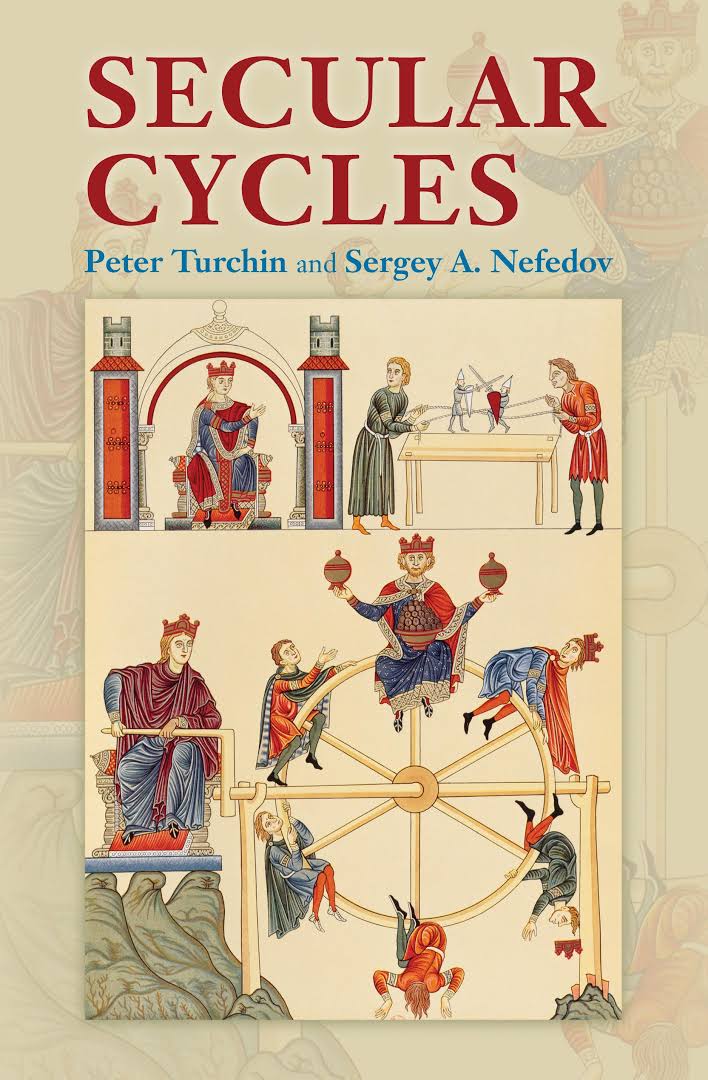
Secular Cycles
Unraveling the dynamics of History through Demographic, Economic, and Political Shifts in Agrarian Societies
Many historical processes exhibit recurrent patterns of change Century-long periods of population expansion come before long periods of stagnation and decline; the dynamics of prices mirror population oscillations; and states go through strong expansionist phases followed by periods of state failure, endemic sociopolitical instability, and territorial…