Media
Articles about Peter Turchin, interviews, podcasts, videos, and published reviews.
Search Media
Filter by format, date range, outlet, or keyword.
Media format
Peter Turchin: The Collapse of Complex Societies, Elite Overproduction, and Social Unrest
Dr. Peter Turchin is Emeritus Professor at the University of Connecticut in the departments of ecology and evolutionary biology, anthropology, and mathematics. He is a project leader at the Complexity Science Hub Vienna and a research associate at the School of Anthropology at the University of Oxford.…
Can We Predict History like the Weather? | Peter Turchin on Cliodynamics and Zohran Mamdani
Why do civilizations rise, prosper, and then collapse? Here's what the math tells us. In this episode, we sit down with Peter Turchin, complexity scientist and founder of the field of cliodynamics, which uses data and mathematical models to study the long-term cycles of history.…
History’s Sobering Warning About America’s Future
On this week’s Voternomics, author Peter Turchin explains why Donald Trump’s return isn’t a surprise, and what it represents.
“Estados Unidos va hacia una guerra civil. Quizá ya sea tarde para evitarlo”: Peter Turchin (Spanish)
Peter Turchin, académico especializado en el análisis de procesos históricos, cree que Estados Unidos se encamina al desastre. Hasta hace pocos años, que Estados Unidos pueda vivir una nueva guerra civil parecía solo una hipótesis académica. Ya no. La creciente tensión en el país hace que suene cada vez más verosímil.…
Why Societies Fall Apart (And Why the US May Be Next) — Peter Turchin
Peter Turchin is a complexity scientist and one of the founders of cliodynamics — a new, cross-disciplinary field that applies mathematics and big data to test historical theories.
Are We Living Through 'End Times'?
Peter Turchin is not like most historians. For starters, he has an unusual background as an evolutionary biologist studying lemmings and mice. He says that analyzing the complexities of the natural world has allowed him to understand the most complex system of all: human society.…
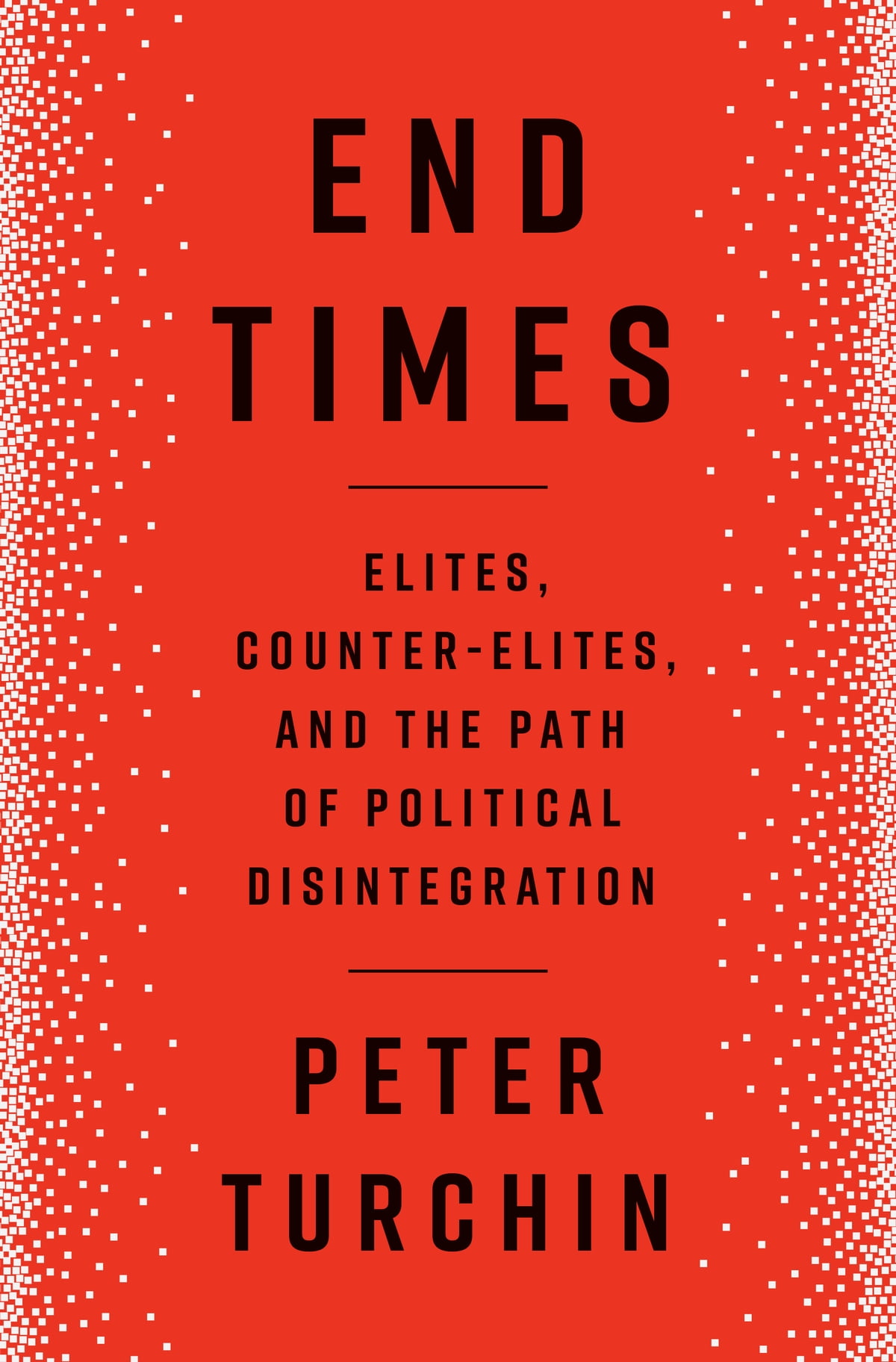
"End Times: Elites, Counter-Elites, and the Path of Political Disintegration" by Peter Turchin
Peter Turchin is Project Leader at the Complexity Science Hub in Vienna, Research Associate at University of Oxford, and Emeritus Professor at the University of Connecticut. Trained as a theoretical biologist, he is now working in the field of historical social science.…
A Huge Outpouring of Human Misery (w/ Peter Turchin)
Scientist-turned-historian Peter Turchin returns! Peter first came on the pod a few months ago to discuss the famous prediction he made in 2010 that we were headed for crisis, circa 2020.…
EP 190 Peter Turchin on Cliodynamics and End Times
Jim talks with Peter Turchin about the field he founded, cliodynamics, which applies the scientific method to history. They discuss the meaning & origins of cliodynamics, distinguishing cliodynamics from previous approaches, regularizing historical data, the interface between models & data, average height as a proxy for biological well-being, the Seshat…
Why the Rise of ‘Counter-Elites’ Spells Bad News for the UK
Peter Turchin joins Merryn Talks Money to discuss his book End Times, a look at how income inequality surges when the balance of power favors the elites. The idea that history is cyclical is hardly new. But exactly what drives those cycles is up for debate.…
Are we overproducing elites and instability?
High levels of political violence and low levels of institutional support suggest we are in the midst of an age of discord. What can we learn from the cycles of history about political disintegration and recovery? Peter Turchin predicted the tumult.…
Peter Turchin Wants to Avoid Political Disintegration
If you have grown up in a household which had decent quality of life and now you are struggling, you cannot even match the degree of wellbeing that your parents achieved, this is very obvious and makes people feel completely dissatisfied with the system that we have now. Over the past few years scholars have warned about a crisis of democracy.…
Peter Turchin: End Times
In this week’s Book Club podcast I talk to Peter Turchin about his new book End Times: Elites, Counter-Elites and the Path of Political Disintegration. He proposes a scientific theory of history, mapping the underlying forces that have led to the collapse of states from the ancient world to the present day, and warns of very turbulent times ahead indeed.
Peter Turchin: Why Empires Rise & Fall
Peter Turchin has continued the work of Ibn Khaldun, by elaborating upon Khaldun's hypotheses and testing them against the wealth of historical data that we now possess.…
The Coming Collapse (w/ Peter Turchin)
Scientist-turned-historian Peter Turchin is best known for a dire prediction he made in 2010: we were headed for serious unrest, circa 2020. Peter came to this (as-so-happened) accurate prediction by treating the soft science of history like a hard one — what he calls cliodynamics.…
The Value of Everything: E120. Professor Steve Keen Interview- The Future of Money
Professor Steve Keen and Charles Owen discuss Ages of Discord (segment starts at 47:18)

The Forum (BBC): Hierarchy
The principle of top down hierarchy seems extraordinarily resilient in human societies. But why have we come to organise ourselves this way? Is it to be more efficient and effective?…
The Philosophy of Russell Brand
BBC Radio 4 Analysis program interviews me, among others, in this piece on “anarcho-populism.”