Research Topic
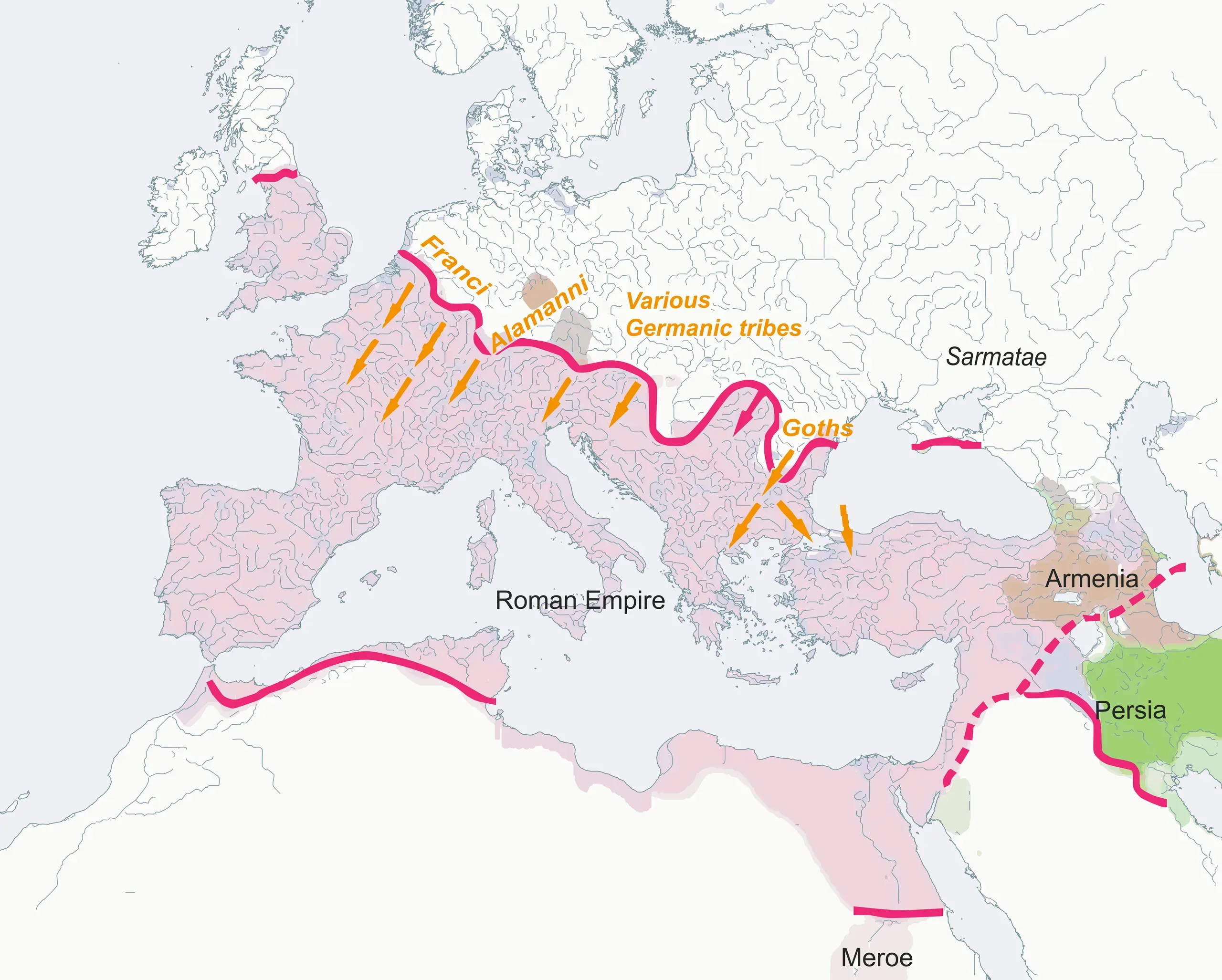
Cooperation and Collective Action
The institutions, norms, and evolutionary processes that support cooperation and coordinated action at increasing social scales.
Work on Cooperation
Current Research Projects
Combining quantitative analysis with large historical datasets, Peter Turchin and collaborators study how complex societies evolve, why they periodically enter crisis, and why some recover while others undergo severe breakdown.
What is society?
This article engages with Mark Moffett’s proposed definition of society, which emphasizes shared group identification over social interaction, and argues for a different, problem-driven approach to definition in evolutionary social science. Rather than treating definitions as primary, I situate them within the broader research agenda aimed at explaining the Great Holocene Transformation—the dramatic expansion of human societies in scale and complexity over the past 10,000 years. My central analytical focus is on cooperation: the capacity of individuals to coordinate actions toward collective goals despite incentives to free-ride. Accordingly, society is defined here as a collective of individuals engaged in sustained cooperation, with interest group proposed as a more flexible and analytically useful term. Within this framework, polities represent a key subtype of interest groups, characterized by their role as independent political units whose persistence depends on maintaining cooperative cohesion, particularly among elites. Other commonly cited features of societies—such as group identification, territoriality, and intergenerational continuity—are treated as secondary mechanisms that support cooperation rather than defining properties. Ultimately, I argue that flexible, operational definitions are most valuable at intermediate stages of scientific inquiry, where they facilitate the construction and empirical testing of theoretical models.
CCS 26 Keynote : The Great Holocene Transformation
During the Holocene the scale and complexity of human societies increased dramatically. Generations of scholars have proposed different theories explaining this evolution, which range from functionalist explanations, focusing on the provision of public goods, to conflict theories, emphasizing the role of internal class struggle or external warfare.…
Social complexity promotes cooperation and functional integration in large-scale societies
How do large-scale human societies maintain functional integration? Over the last 12,000 years, polities grew over six orders of magnitude in population, far exceeding the scale at which the interpersonal mechanisms that promote cooperation in small-scale societies can operate. Here we test the hypothesis that cooperation and functional integration in large-scale societies is promoted by social (and, specifically, institutional) complexity. We model large-scale societies as territorial social networks subject to energetic, cognitive, and competitive constraints. We demonstrate that agricultural intensification generates increasing population density, raising the per capita rate of social interaction beyond what small-scale mechanisms can sustain and requiring institutional rules to substitute for interpersonal knowledge. The model predicts that territory and social complexity scale with polity population with exponents of 5/6 and 1/6. Tests against data describing hundreds of polities spanning the Holocene support these predictions, providing quantitative evidence that social complexity is a central integrative mechanism enabling large-scale human cooperation.
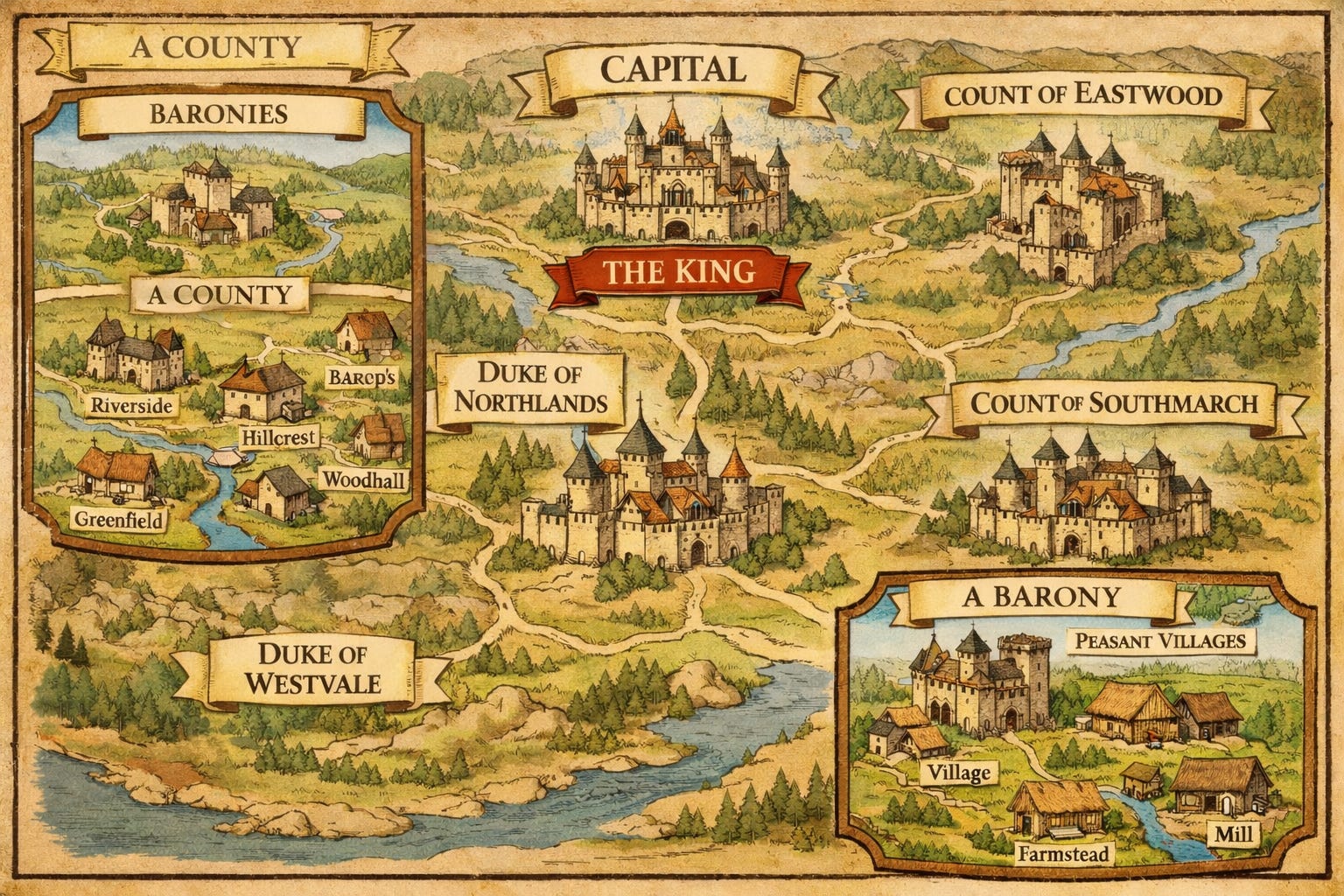
Multilevel Selection II
MLS in Cultural Macroevolution
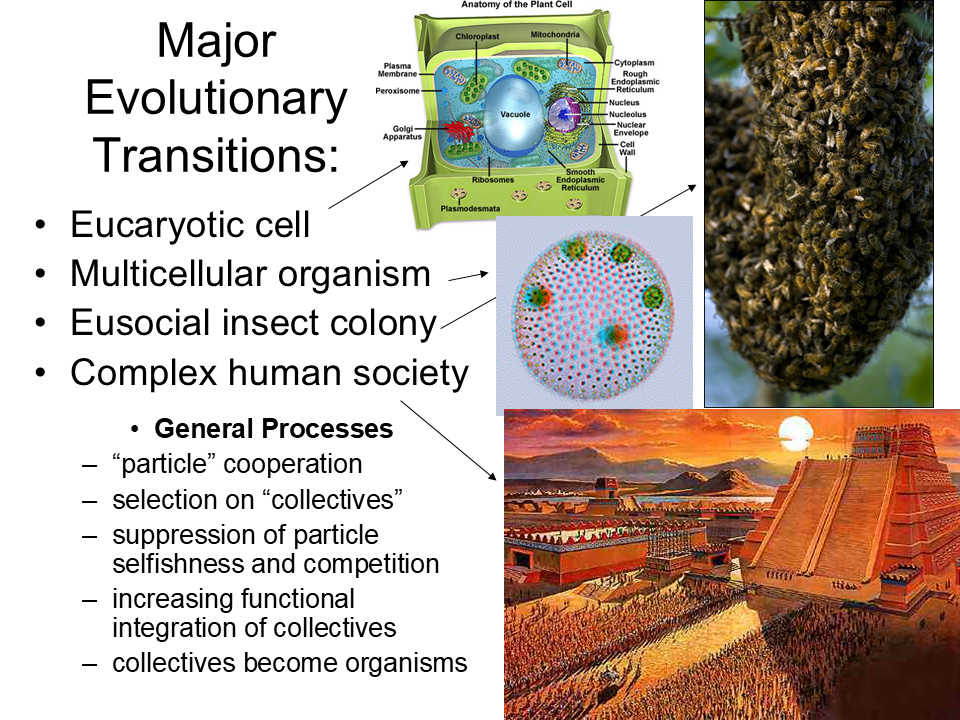
The Controversy over Multilevel Selection
Science Proceeds by Paradigm Shifts
Multilevel Selection in Cultural Macroevolution
Cultural macroevolution (CME) is a subfield of cultural evolution that studies large-scale changes in the cultural traits of whole groups. A central question in CME is how and why characteristics of polities (such as chiefdoms, states, and empires) evolve over time. Multilevel selection, and especially its application to cultural evolution, provides a very useful theoretical framework for CME because many polity-level characteristics evolve under selection pressures that act in opposite directions at different levels of hierarchical organization. In this chapter I discuss the conceptual framework that multilevel selection provides for studying CME and summarize the main empirical results from my recent book (Turchin 2025). I conclude that major predictions of cultural multilevel selection theory enjoy substantial empirical support.
The Great Holocene Transformation
What Complexity Science Tells Us about the Evolution of Complex Societies
Why do the 99.9% of humanity live in large-scale societies organized as states? During the Holocene (the last 10,000 years), human societies have been transformed utterly: from small groups of nomadic foragers to our current interconnected world of large-scale societies organized as states. Population numbers, agricultural productivity, technological…

Klima und Geschichte
Es ist umstritten, wie stark historische Ereignisse durch Klimaschwankungen mitbestimmt werden. Forschende sind einem Verständnis der Zusammenhänge nun näher gekommen. Forschende um Daniel Hoyer und Peter Turchin (Complexity Science Hub Vienna) sind der Entwirrung der komplexen Wechselbeziehungen nun einen Schritt näher gekommen: Sie haben alle…

Climate change has toppled some civilizations but not others. Why?
The link between environmental disasters and societal collapse, explained. The Roman Empire fell more than 1,500 years ago, but its grip on the popular imagination is still strong, as evidenced by a recent trend on TikTok.…

Culture, polity, economy decide society's future in changing climate crises, researchers say
An interplay of cultural, political, and economic factors decides the course and outcomes of a "changing climate" crisis, and not environmental forces alone, researchers say. Drawing lessons from history, "not every ecological shock or climatic anomaly leads to collapse" and "not every crisis involves a major environmental stressor", the researchers at…
Navigating polycrisis: long-run socio-cultural factors shape response to changing climate
Climate variability and natural hazards like floods and earthquakes can act as environmental shocks or socioecological stressors leading to instability and suffering throughout human history. Yet, societies experience a wide range of outcomes when facing such challenges: some suffer from social unrest, civil violence or complete collapse; others prove more resilient and maintain key social functions. We currently lack a clear, generally agreed-upon conceptual framework and evidentiary base to explore what causes these divergent outcomes. Here, we discuss efforts to develop such a framework through the Crisis Database (CrisisDB) programme. We illustrate that the impact of environmental stressors is mediated through extant cultural, political and economic structures that evolve over extended timescales (decades to centuries). These structures can generate high resilience to major shocks, facilitate positive adaptation, or, alternatively, undermine collective action and lead to unrest, violence and even societal collapse. By exposing the ways that different societies have reacted to crises over their lifetime, this framework can help identify the factors and complex social–ecological interactions that either bolster or undermine resilience to contemporary climate shocks.
Polykrisen: Sozialer Zusammenhalt macht Gesellschaft widerstandsfähig (German)
Der Ansicht vieler Forscher oder politischer Analysten nach befinden wir uns in einer "Polykrise" aus Klimawandel, Naturkatastrophen, wirtschaftlicher Ungleichheit, politischer Lagerbildung, gewaltsamen Konflikten und mehr.…
Sozialer Zusammenhalt hilft bei multiplen Krisen (German)
Ob Klimawandel, wirtschaftliche Ungleichheit oder politische Lagerbildung - immer wieder ist zu hören, dass wir in Zeiten der Krisen leben. Forscherinnen und Forscher haben nun eine historische Datenbank ähnlicher Krisen aufgebaut, um nach Faktoren zu suchen, die beim Bewältigen der Situationen geholfen haben.…
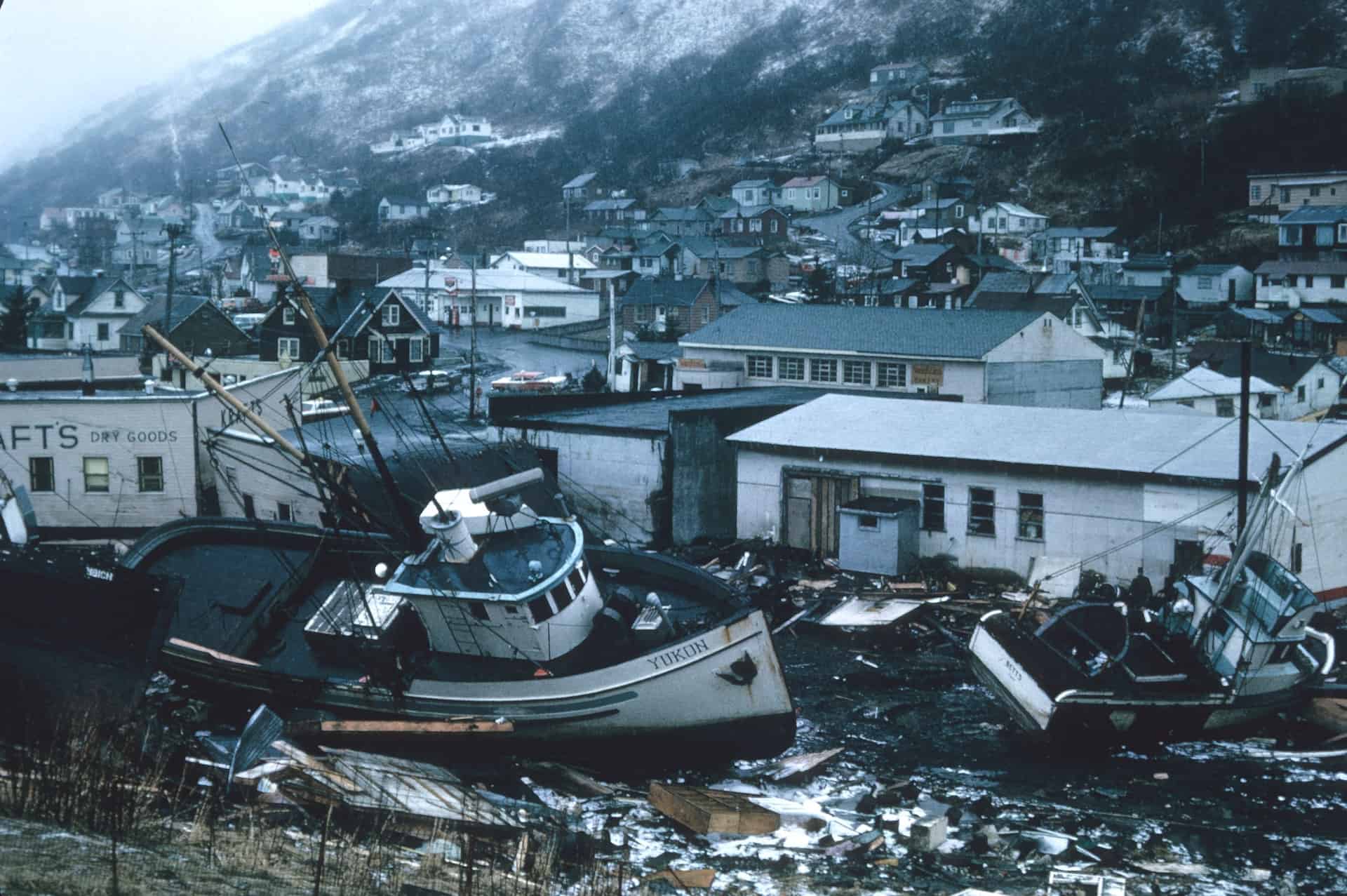
Why do some environmental shocks lead to disaster while others don't?
It's no longer just about stopping, but how we can live with climate change. To figure this out, we must delve into our cultures, as highlighted in a special issue of The Royal Society. A study by the Complexity Science Hub points out how our history could help guide the way. Currently, we are grappling with a global crisis convergence.…

Zusammenhalt macht Gesellschaft widerstandsfähig (German)
Kriege, Inflation, Klimaerwärmung etc.: Die Gegenwart ist geprägt von einer „Polykrise“. In der Geschichte hat es solche Mehrfachkrisen immer wieder gegeben. Eine neue Studie zeigt nun, welche Faktoren es einer Gesellschaft erlauben, solche Situationen zu meistern. Stabilität bringt demnach vor allem sozialer Zusammenhalt.
Navigating Polycrisis: long-run socio-cultural factors shape response to changing climate
Climate variability and natural hazards like floodsandearthquakescan act as environmental shocksor socioecological stressors leading toinstabilityand suffering throughout human history.Yet, societies experience a wide range of outcomes when facingsuch challenges: some suffer from social unrest, civil violence, or complete collapse; others prove more resilient and maintain key social functions. Wecurrently lack a clear, generally agreed-upon conceptual framework and evidentiary base to explore what causes these divergent outcomes.Here, we discuss efforts to develop such a framework through theCrisis Database (CrisisDB) programme. We illustrate that the impact of environmental stressors ismediated through extant cultural, political, and economic structuresthatevolve over extendedtimescales (decades to centuries). These structures cangenerate high resilience tomajor shocks, facilitate positive adaptation, or, alternatively,undermine collective action and lead to unrest,violence, and even societal collapse. By exposing the ways that different societieshavereacted to crisesover their lifetime, this frameworkcan help identify the factors and complex social-ecological interactions that either bolster or undermine resilience to contemporary climate shocks.
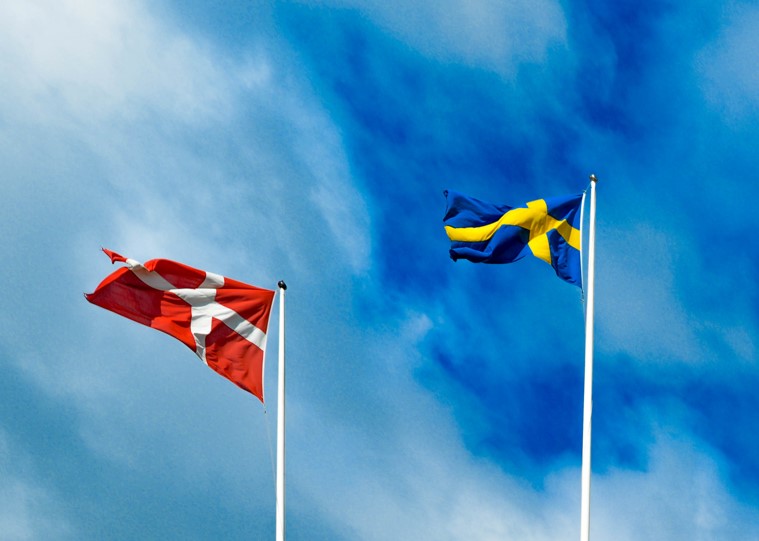
A Tale of Two Countries
Sweden and Denmark are both Nordic countries speaking similar languages, sharing a lot of culture and a lot of common history. But they followed very different approaches to managing the Covid-19 pandemic.…