Media
Is The West Heading Towards Social Breakdown? | Aaron Bastani Meets Peter Turchin
History is not just one thing after another. Historians spend lifetimes figuring out how X event in medieval France impacted Y event in 20th century Polynesia - but none of these historians have truly 'done the math' like this week's guest. Coming from a background in applied mathematics, Peter Turchin has gathered an unprecedented amount of historical…
Load media from YouTube
The provider may receive technical information and set cookies when this media is loaded.
Description
History is not just one thing after another. Historians spend lifetimes figuring out how X event in medieval France impacted Y event in 20th century Polynesia - but none of these historians have truly 'done the math' like this week's guest. Coming from a background in applied mathematics, Peter Turchin has gathered an unprecedented amount of historical data which he believes gives him a better chance than most of predicting how societies slide into grave crises. He's been proven right too, in the early 2010s, he predicted that 2020 would see a global rise in instability.
Outlet
Novara Media
Format
Video
Connections
Related work

End Times
Elites, Counter-Elites, and the Path of Political Disintegration
From the pioneering co-founder of cliodynamics, the groundbreaking new interdisciplinary science of history, a big-picture explanation for America's civil strife and its possible endgames Peter Turchin, one of the most interesting social scientists of our age, has infused the study of history with approaches and insights from other fields for more than a…
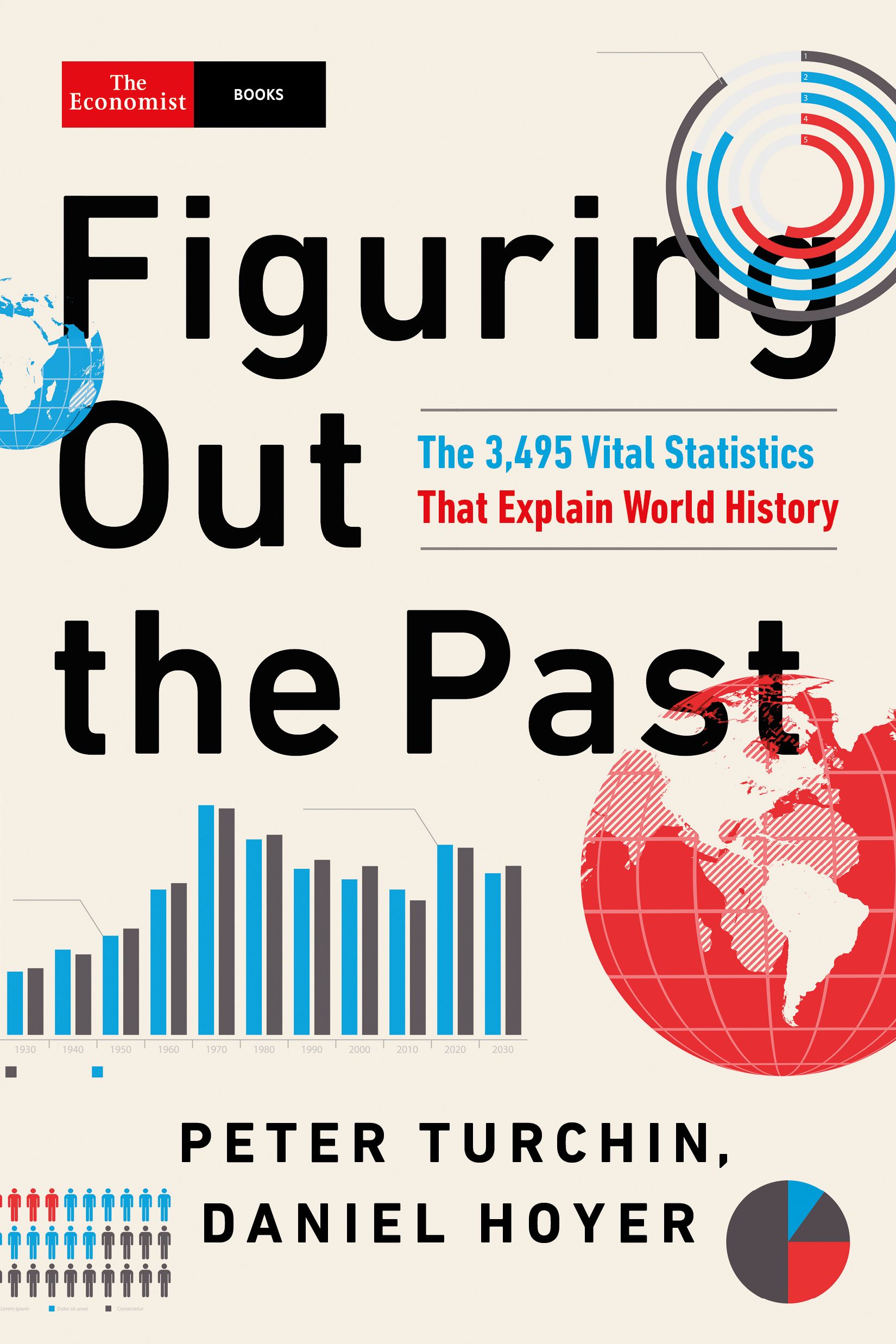
Figuring Out the Past: The 3,495 Vital Statistics that Explain World History
Discover the world records that define our history and jump headfirst into the past using scientific data that reveals accurate and insightful answers to life’s biggest questions.
What was history's biggest empire? Or the tallest building of the ancient world? What was the plumbing like in medieval Byzantium? The average wage in the Mughal Empire? Where did scientific writing first emerge? What was the bloodiest ever ritual human sacrifice? We are used to thinking about history in terms of stories. Yet we understand our own world…
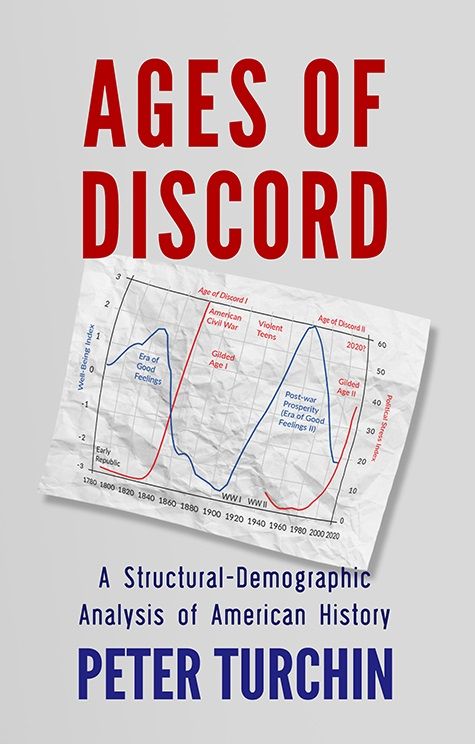
Ages of Discord
A Structural-Demographic Analysis of American History
The real wage of a US worker today is less than it was 40 years ago—but there are four times as many multimillionaires. As inequality grows, the politics become more poisonous. Every year, more and more Americans go on shooting sprees, killing strangers and passers-by—and now, increasingly, representatives of the state. Troubling trends of this kind are…
Secular Cycles
Unraveling the dynamics of History through Demographic, Economic, and Political Shifts in Agrarian Societies
Many historical processes exhibit recurrent patterns of change Century-long periods of population expansion come before long periods of stagnation and decline; the dynamics of prices mirror population oscillations; and states go through strong expansionist phases followed by periods of state failure, endemic sociopolitical instability, and territorial…
Historical Dynamics
A Synthetic Approach to Historical Expansions and Contractions through Mathematical Modeling and Empirical Analysis
Why States Rise and Fall Many historical processes are dynamic. Populations grow and decline. Empires expand and collapse. Religions spread and wither. Natural scientists have made great strides in understanding dynamical processes in the physical and biological worlds using a synthetic approach that combines mathematical modeling with statistical…
All Crises are Unhappy in their Own Way: The role of societal instability in shaping the past
Societal ‘crises’ are periods of turmoil and destabilization in socio-cultural, political, economic, and other systems, often accompanied by varying amounts of violence and sometimes significant changes in social structure. The extensive literature analyzing societal crises has concentrated on relatively few historical examples (large-scale events such the fall of the Roman Empire or the French and Russian Revolutions) emphasizing different aspects of these events as potential causes or consistent effects. To investigate crises and prior approaches to explaining them, and to avoid a potential small-sample size bias present in several previous studies, we sought to uniformly characterize a substantial collection of historical crises, spanning millennia, from the prehistoric to post-industrial, and afflicting a wide range of polities in diverse global regions; the Crisis Database (CrisisDB). Here, we describe this dataset which comprises 168 crises suggested by historians and characterized by a number of significant 'consequences' (such as civil war, epidemics, or loss of population) including also institutional and cultural reforms (for example improved sufferance or constitutional changes) that might occur during and immediately following the crisis period. Our analyses show that the consequences experienced by each crisis is highly variable. The outcomes themselves are uncorrelated with one another and, overall, the set of consequences is largely unpredictable when compared to other large-scale properties of society suggested by previous scholars such as its territorial size, religion, administrative size, or historical recency. We conclude that there is no ‘typical’ societal crisis of the past, but crisis situations can take a variety of different directions. We offer some suggestions on the forces that might drive these varying consequences for exploration in future work.