Research
Publications
Academic publications by Peter Turchin and his collaborators.
Search Publications
Filter by publication form, journal or venue, and date range, or search by author, title, and abstract.
Publication form
Journal or venue
All journals & venues (18)
Social complexity promotes cooperation and functional integration in large-scale societies
How do large-scale human societies maintain functional integration? Over the last 12,000 years, polities grew over six orders of magnitude in population, far exceeding the scale at which the interpersonal mechanisms that promote cooperation in small-scale societies can operate. Here we test the hypothesis that cooperation and functional integration in large-scale societies is promoted by social (and, specifically, institutional) complexity. We model large-scale societies as territorial social networks subject to energetic, cognitive, and competitive constraints. We demonstrate that agricultural intensification generates increasing population density, raising the per capita rate of social interaction beyond what small-scale mechanisms can sustain and requiring institutional rules to substitute for interpersonal knowledge. The model predicts that territory and social complexity scale with polity population with exponents of 5/6 and 1/6. Tests against data describing hundreds of polities spanning the Holocene support these predictions, providing quantitative evidence that social complexity is a central integrative mechanism enabling large-scale human cooperation.
Multilevel Selection in Cultural Macroevolution
Cultural macroevolution (CME) is a subfield of cultural evolution that studies large-scale changes in the cultural traits of whole groups. A central question in CME is how and why characteristics of polities (such as chiefdoms, states, and empires) evolve over time. Multilevel selection, and especially its application to cultural evolution, provides a very useful theoretical framework for CME because many polity-level characteristics evolve under selection pressures that act in opposite directions at different levels of hierarchical organization. In this chapter I discuss the conceptual framework that multilevel selection provides for studying CME and summarize the main empirical results from my recent book (Turchin 2025). I conclude that major predictions of cultural multilevel selection theory enjoy substantial empirical support.
A Structural-Demographic Analysis of Japan: 1945–2050
Is it possible to forecast the dynamics of societal resilience and its obverse, sociopolitical unrest or even breakdown? This is the goal of Structural-Demographic Theory (SDT), which integrates mechanism-based models with data and focuses on the dynamics of structural drivers for instability over the long-term (thus, requiring a historical approach). Several recent studies utilizing the SDT framework have proven adept at predicting (or “retrodicting”) sociopolitical instability in c.20 past societies. It was also used in 2010 to successfully forecast the outbreak of US instability for 10 years in the future (in 2020). This study applies the SDT to explore the dynamics of another contemporary society. Our aim is to empirically test SDT in a most rigorous way, using it to forecast future dynamics of sociopolitical instability in Japan. Our research questions are: (1) how accurately (if at all) does the SDT framework predict future levels of sociopolitical instability; (2) What are the relative contributions of possible drivers of instability, including those proposed by SDT, as well as other theories, in explaining instability levels; and (3) are there key ‘leverage points’ that might help mitigate the negative consequences of instability? This article explains how we develop quantitative indices for SDT drivers of instability: mass immiseration, elite overproduction, and state fiscal distress. We then construct a Political Stress Index to track the evolution of these pressures from the 1990s to the present and implement a multipath forecasting model to project future trends through 2050, using a variety of intervention (or non-intervention) scenarios. Our plan is to revisit these predictions ten years in the future with the goal of assessing their accuracy.
CRISES AVERTED. How A Few Past Societies Found Adaptive Reforms in the Face of Structural-Demographic Crises
Historians and social scientists have long been preoccupied with understanding and documenting periods of crisis. Such emphasis is only growing, and becoming more pressing, as the world continues to face a number of interrelated stressors in the form of irreversible climate change, major ecological shocks and disease outbreaks, eruptions of military violence, economic disruptions and deepening inequalities, political polarization and unrest, the rise of authoritarian and nationalist regimes. Crises in these domains are not new, but have been recurrent features of past societies. Although these periods have typically led to massive loss of life, the failure of critical institutions, and even complete societal collapse, there are instances in the historical record of societies managing to turn the tide of crisis even as violence and social turmoil grow. Here, we focus on four such cases of crises mitigated with structural reforms revealed from our previous historical analyses: early Republican Rome, mid-19th century England and Russia, USA during the the late 20th to early 21st centuries. Utilizing structural demographic theory as a lens to explore these cases, we seek to expose the pressures that built up leading to crisis and the early signs of violent confrontation revealed by these societies, as well as to examine the conditions and key decisions made in the midst of this unrest that allowed these societies to turn the tide and enact significant structural adaptations. Our findings have clear relevance to understanding and navigating similar crises in contemporary societies.
Cliopatria - A geospatial database of world-wide political entities from 3400BCE to 2024CE
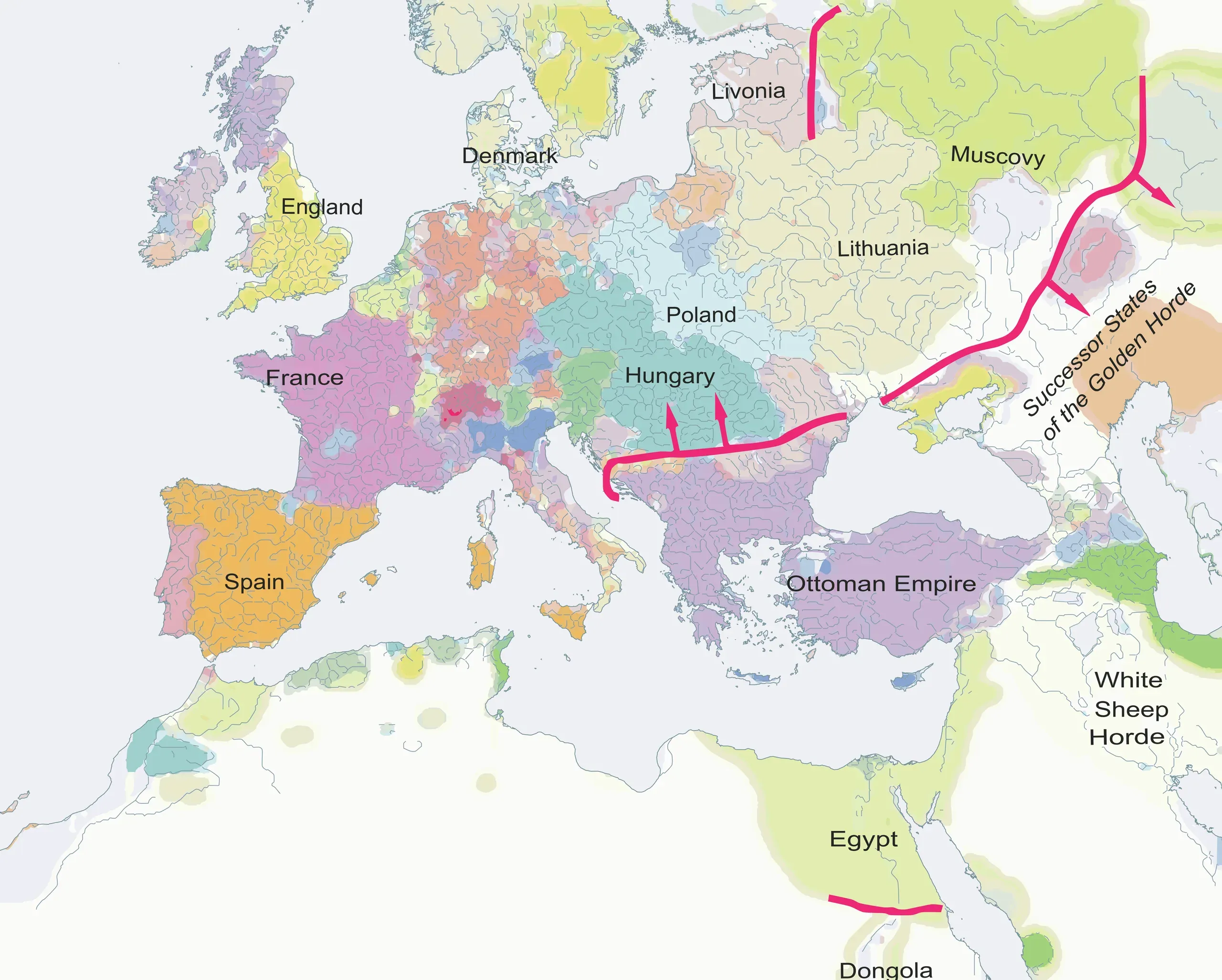
The scientific understanding of the complex dynamics of global history – from the rise and spread of states to their declines and falls, from their peaceful interactions with economic or diplomatic exchanges to violent confrontations – requires, at its core, a consistent and explicit encoding of historical political entities, their locations, extents and durations. Numerous attempts have been made to produce digital geographical compendia of polities with different time depths and resolutions. Most have been limited in scope and many of the more comprehensive geospatial datasets must either be licensed or are stored in proprietary formats, making access for scholarly analysis difficult. To address these issues we have developed Cliopatria, a comprehensive open-source geospatial dataset of worldwide states, political groups, events, and rulers from 3400BCE to 2024CE. Presently it comprises over 1800 political entities sampled at varying timesteps and spatial scales. Here, we discuss its construction, its scope, and its current limitations.
All Crises are Unhappy in their Own Way: The role of societal instability in shaping the past
Societal ‘crises’ are periods of turmoil and destabilization in socio-cultural, political, economic, and other systems, often accompanied by varying amounts of violence and sometimes significant changes in social structure. The extensive literature analyzing societal crises has concentrated on relatively few historical examples (large-scale events such the fall of the Roman Empire or the French and Russian Revolutions) emphasizing different aspects of these events as potential causes or consistent effects. To investigate crises and prior approaches to explaining them, and to avoid a potential small-sample size bias present in several previous studies, we sought to uniformly characterize a substantial collection of historical crises, spanning millennia, from the prehistoric to post-industrial, and afflicting a wide range of polities in diverse global regions; the Crisis Database (CrisisDB). Here, we describe this dataset which comprises 168 crises suggested by historians and characterized by a number of significant 'consequences' (such as civil war, epidemics, or loss of population) including also institutional and cultural reforms (for example improved sufferance or constitutional changes) that might occur during and immediately following the crisis period. Our analyses show that the consequences experienced by each crisis is highly variable. The outcomes themselves are uncorrelated with one another and, overall, the set of consequences is largely unpredictable when compared to other large-scale properties of society suggested by previous scholars such as its territorial size, religion, administrative size, or historical recency. We conclude that there is no ‘typical’ societal crisis of the past, but crisis situations can take a variety of different directions. We offer some suggestions on the forces that might drive these varying consequences for exploration in future work.
Empirically Testing Predictions of an Attrition Warfare Model for the War in Ukraine
The goal of this study is to empirically test hypotheses about wars of attrition by evaluating their predictions for the conflict in Ukraine. Evaluation will occur after the war is over and authoritative data sources become available for analysis. This pre-registration document presents two quantitative hypotheses that make opposite predictions about the course of the War in Ukraine: (1) the Economic Power hypothesis, which predicts a win for Ukraine and (2) the Casualties Rates hypothesis, which predicts a win for Russia. Additionally, I consider an alternative hypothesis, according to which the outcome will be determined by random unforeseen events. The document includes four main parts: 1. An introduction providing the conceptual background and the rationale for this study. 2. The mathematical framework and a computational model that incorporates both Economic Power and Casualties Rates hypotheses as special cases. 3. An analysis plan that defines model outputs (what is predicted) and model inputs (parameter values and initial conditions), which need to be estimated from data. 4. An interim assessment (as of Summer 2023) using non-authoritative sources illustrating how, after the end of the war, input parameters will be estimated and the accuracy of predictions assessed. At the time of pre-registration (November 2023) the conflict is still unresolved. Neither side has made significant territorial gains for over a year (since the late Fall of 2022). Furthermore, no authoritative source for data, needed to accurately estimate inputs, is currently available. Estimates published in the press differ wildly depending on the source. As a consequence, the alternative predictions discussed in the interim assessment should not be taken as predicting the future course of the conflict. They instead are meant to demonstrate how these specific scientific hypotheses about war dynamics will be assessed after the war concludes.
Landscape of Fear: Indirect effects of conflict can account for large-scale population declines in non-state societies
The impact of inter-group conflict on population dynamics has long been debated, especially for prehistoric and non-state societies. In this work, we consider that beyond direct battle casualties, conflicts can also create a “landscape of fear” in which many non-combatants near theaters of conflict abandon their homes and migrate away. This process causes population decline in the abandoned regions and increased stress on local resources in better protected areas that are targeted by refugees. By applying analytical and computational modeling, we demonstrate that these indirect effects of conflict are sufficient to produce substantial, long-term population boom-and-bust patterns in non-state societies, such as the case of Mid-Holocene Europe. We also demonstrate that greater availability of defensible locations, by acting to protect and maintain the supply of combatants, increases the permanence of the landscape of fear and the likelihood of endemic warfare.
Empirically Testing and Refining Structural Demographic Theory: A Methodological Guide
Are human societies dynamical systems? Can they be studied—and, perhaps, to a degree predicted—with the methods of complexity science, such as agent-based models and big data analytics? If yes, what are the limits to prediction? A particularly challenging question is, can we forecast the dynamics of societal resilience and its obverse, sociopolitical unrest or even breakdown? So far efforts to predict onset of rebellions and civil wars using theory-free big data approaches have proved unsuccessful. An alternative approach, based on Structural-Demographic Theory (SDT), which integrates mechanism-based models with data and focuses on the dynamics of structural drivers for instability over the long-term (thus, requiring a historical approach), has shown better promise. Specifically, several recent studies utilizing the SDT framework have proven adept at predicting (or “retrodicting”) sociopolitical instability in c.20 past societies. It was also used in 2010 to successfully forecast outbreak of US instability 10 years in the future (in 2020). Collectively, this work is producing a growing body of evidence showcasing the ability of SDT-based approaches to uncover critical societal dynamics in the deep past as well as more contemporary cases. The next step in these efforts is to employ these insights towards the future. Here, we outline the SDT approach and document how it can be employed to explore the dynamics of any number of past and contemporary societies, appealing to researchers to pursue this line of research in as many cases as possible. The overall goal of this research is to empirically test SDT in a most rigorous way, using it to forecast coming periods of unrest. Because the theory is likely to fail in many ways, the second goal is to learn from these errors so that we can further refine the theory (or develop better-working alternatives). Specifically, we will learn: (1) how accurately (if at all) does the SDT framework predict future levels of sociopolitical instability (integrating incidence of antigovernment demonstrations, violent riots, and armed conflict); (2) What are the relative contributions of possible drivers of instability, including those proposed by SDT, as well as other theories, in explaining instability levels; and (3) are there key ‘leverage points’ that might help mitigate the negative consequences of instability?
War and the origins of Chinese civilization
Why did complex societies, characterized by densely-populated walled cities, first arise in northern China, jump-starting early Chinese civilization? We explore this question in three steps. First, the North, especially the alluvial plains along the Yellow and the Yangtze Rivers, had generally flatter terrains than the South. Second, by dividing China’s landmass into 100 km ×100 km grid-cells and using our archaeological database, we demonstrate that cells with flatter terrains faced higher war threats in prehistoric and early historic times, where war threats are respectively proxied by each cell’s number of excavated military grave goods for the Neolithic period (8000−1700 BCE) and by its number of recorded conflicts for the Eastern Zhou (770−221 BCE, the earliest period for which war data are available). Third, we establish that during both the Neolithic and the Eastern Zhou, higher war threats led to the construction of more settlements with defensive walls and moats, resulting in more walled cities (i.e., early cradles of civilization). Thus, warfare was a key driver of the evolution of complex societies. This finding is robust after controlling for irrigation potential, agricultural productivity, and threats from the steppe, as well as under alternative specifications.
Navigating Polycrisis: long-run socio-cultural factors shape response to changing climate
Climate variability and natural hazards like floodsandearthquakescan act as environmental shocksor socioecological stressors leading toinstabilityand suffering throughout human history.Yet, societies experience a wide range of outcomes when facingsuch challenges: some suffer from social unrest, civil violence, or complete collapse; others prove more resilient and maintain key social functions. Wecurrently lack a clear, generally agreed-upon conceptual framework and evidentiary base to explore what causes these divergent outcomes.Here, we discuss efforts to develop such a framework through theCrisis Database (CrisisDB) programme. We illustrate that the impact of environmental stressors ismediated through extant cultural, political, and economic structuresthatevolve over extendedtimescales (decades to centuries). These structures cangenerate high resilience tomajor shocks, facilitate positive adaptation, or, alternatively,undermine collective action and lead to unrest,violence, and even societal collapse. By exposing the ways that different societieshavereacted to crisesover their lifetime, this frameworkcan help identify the factors and complex social-ecological interactions that either bolster or undermine resilience to contemporary climate shocks.
Soil fertility depletion is not a credible mechanism for population boom/bust cycles in agricultural societies
Soil fertility depletion presents a negative feedback mechanism that could have impacted early adoptersof agriculture. In this paper, we present a formal mathematical analysis of the question whether such feedback can lead to population cycles in the context of early agriculturalists, such as the boom and bustpatterns suggested by an increasing amount of evidence for Neolithic Europe. We do this by considering candidates of second-order analytic models that capture dynamical interaction among farmers and soil fertility. Using general mathematical arguments, we show that under plausible conditions, the feedback between population growth and soil resource depletion is unlikely to lead to population cycles. This result is the consequence of two factors. First, there is an important mathematical difference between biotic (i.e. logistic) and abiotic resource replenishment; soil nutrients are better modelled by the abiotic case which leads to more stable dynamics. Second, under realistic conditions, the resource replenishment process has fast time-scales compared to attainable population growth rates, reinforcing the tendency of stable dynamics. Both of these factors play a role when considering early agricultural societies, and imply that nutrient depletion is not a credible mechanism for patterns of boom and bust cycles observed in the archaeological record. Published in Human Ecology
Structural-Demographic Analysis of the Qing Dynasty (1644–1912) Collapse in China
This paper analyzes the collapse of the Qing dynasty (1644–1912) through the lens of the Structural Demographic Theory (SDT), a general framework for understanding the drivers of socio-political instability in state-level societies. Although a number of competing ideas for the collapse have been proposed, none provide a comprehensive explanation that incorporates the interaction of all the multiple drivers involved. We argue that the four-fold population explosion during the 19th century, the competition for a stagnant number of elite positions, and increasing state fiscal stress combined to produce an increasingly disgruntled populace and elite, leading to significant internal rebellions. We find that while neither the ecological disasters nor the foreign incursions witnessed during the 19th century were sufficient on their own to bring down the Qing, when coupled with the rising internal socio-political stresses, they produced a rapid succession of triggering events that culminated in the Qing collapse. Published In PLOS ONE
Moralizing Supernatural Punishment and Reward: A Response to Critics
In this contribution we respond to three critiques of our 2019 article ‘Complex Societies Precede Moralizing Gods throughout World History.’We clarify that our research does not, as our critics suppose, support the claim that moralizing gods played a decisive role in the development of complex societies. Indeed our goal was to test this claim and we found it wanting. Our methods ‘reduce’neither religion or social complexity in the ways claimed, while our tentative conclusions about the relationship between frequent, routinized ritual and social cohesion are supported by much research beyond the paper under discussion. In the Roman Empire, many forms of collective ritual contributed to the propagation of Romanitas. We have never claimed that this depended on absolute uniformity of belief. Other misconceptions about our supposedly ‘inattentive’qualitative analysis result from misreadings of information in our open-access database, which functions as an evolving set of information relevant to specific research questions rather than a general encyclopedia. Despite these disagreements, we continue to maintain that neither qualitative historical methods nor quantitative analytic approachesalone can produce satisfying answers to causal questions about world history. The best approach, we argue, is to integrate the insights from humanities with‘Big Data’analyses from social science, and we welcome continued engagement and collaborationacrosstraditionaldisciplinary boundaries.
Flattening the Curve: Learning the lessons of world history to mitigate societal crises
The world is experiencing myriad crises, from global climate change to a major pandemic to runaway inequality, mass impoverishment, and rising sectarian violence. Such crises are not new, but have been recurrent features of past societies. Although these periods have typically led to massive loss of life, the failure of critical institutions, and even complete societal collapse, lessons can be learned from societies that managed to avoid the more devastating and destructive outcomes. Here, we present a preliminary analysis of outcomes from periods of crisis in 50 historical societies and examine closely four cases of averted crisis in world history, highlighting common features. A key observation is that the structural-demographic cycles that give rise to societal crises typically incorporate a ‘gilded age’ during which more future-minded governance could avert future crises. To accomplish more forward-thinking public policy, capable not just of ‘flattening the curve’, but of actually breaking the cycle that produces societal crises in the first place, we argue that systematic quantitative analysis of patterns in world history is a necessary first step.
Testing the Big Gods Hypothesis with global historical data: a review and ‘retake’
This ‘Retake’ article presents a corrected and extended version of a Letter published in Nature (Whitehouse et al., 2019) which set out to test the Big Gods hypothesis proposing that beliefs in moralizing punitive deities drove the evolution of sociopolitical complexity in world history. The Letter was retracted by the authors in response to a critique by Beheim et al. (2021). Correction of errors in the coding and analysis of missing data to address this critique does not significantly change the main findings of the original Nature Letter. We report the results of a major reanalysis of Seshat data following expansion of the codebook and database and substantial improvements to our data management methods. We also employ a more direct statistical methodology to test theories of evolutionary causality. Together, these results show a compellingly convergent picture, confirming the headline finding of the original Letter in Nature, which shows that the largest increases in social complexity do indeed precede Big Gods in world history and that Big Gods did not contribute to the evolution of sociopolitical complexity as predicted by the Big Gods hypothesis.
Multipath Forecasting: the Aftermath of the 2020 American Crisis
Recent years have seen major political crises throughout the world. Most recently, the US was swept by a wave of protests, urban riots, and violent confrontations between left- and right-wing extremists. Understanding how future crises will unfold and assessing the resilience of different countries to various shocks is of foremost importance in averting the human costs of state breakdown and civil war. In a recent publication (Turchin et al. 2018) we proposed a novel transdisciplinary approach to modeling social breakdown, recovery, and resilience. This approach builds on recent breakthroughs in macrosocial dynamics (and specifically structural-demographic theory), statistical analysis of large-scale historical data, and dynamic modelling. Our main goal is to construct a series of probabilistic scenarios of social breakdown and recovery. We called this approach—similar to ensemble forecasting in weather prediction—multipath forecasting (MPF). In this article I develop a “prototype” of the MPF engine with the goal of illustrating the utility a fully developed version may have. I first apply the computational model to the period of American history from the beginning of the nineteenth to the end of the twentieth century, with the goal of parameterizing the model and testing it against data. Then I use the parameterized model to forecast the dynamics of instability in the USA beyond 2020 and illustrate how the MPF engine can be used to explore the effects of different policy interventions.
Combining historical and archaeological data with crop models to estimate agricultural productivity in past societies
Carrying capacity, population pressure, and agricultural productivity are of central importance to understanding key innovations in human social and cultural evolution. In this paper we outline how crop yield models can be combined with the historical and archaeological information about past societies compiled by Seshat: Global History Database to infer how agricultural productivity and potential have changed over time in different parts of the world. To aid comparative research we focus on developing a method for calculating the carrying capacity of a particular region based on a number of simplifying assumptions. Here we present two case studies demonstrating the calculation of ancient crop yields and carrying capacity for the regions of Latium (Italy) and Oaxaca (Mexico); regions selected to illustrate a number of different features of past agricultural systems, as well as different staple crops. We outline the strengths and weaknesses of this approach and discuss ways in which it could be adapted to address a range of research questions, e.g. relating to archaeological demography and anthropogenic change. Comparison of our reconstructed carrying capacity series with independent estimates of ancient population from these regions demonstrate broadly good agreement with some notable mismatches as well, highlighting a fruitful area of focus for future studies exploring the gap between achieved population and potential carrying capacity.